

From Ancient Communities and Bedouin Traditions to the Generations Building Modern Jordan
A Country Is More Than Its Landmarks
Jordan is often introduced through its extraordinary places.
Petra carved into rose-colored mountains.
Wadi Rum stretching toward the horizon.
The waters of the Dead Sea.
Roman columns rising above Jerash.
The Citadel overlooking Amman.
These places tell remarkable stories, and together they reveal thousands of years of civilization on the land that is now Jordan.
But they cannot tell the whole story.
Because a country is more than its monuments.
It is the people who live between them.
Jordan’s modern identity has been shaped by Bedouin tribes and farming villages, merchants and craftsmen, Circassians and Chechens, Muslim and Christian communities, Palestinians and families whose roots extend across the towns, mountains, valleys, deserts and cities of the Kingdom.
Later generations brought new experiences as Jordan became a place of refuge for people displaced by conflicts across the region.
Together, these communities created something distinctly Jordanian.
A Young State on Ancient Land
The Hashemite Kingdom of Jordan is a relatively young country built upon extraordinarily ancient land.
Civilizations flourished here thousands of years before the creation of the modern state.
Ammonites, Moabites and Edomites established kingdoms across the region.
Nabataeans created Petra and built trading networks through the deserts.
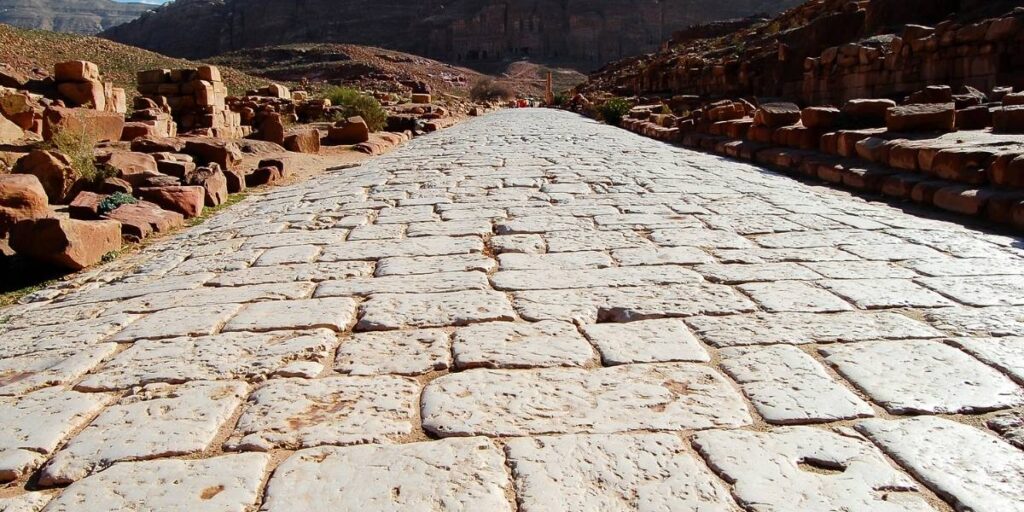
Greeks, Romans and Byzantines left cities, roads, churches and mosaics.
Islamic dynasties added new layers of architecture, faith and culture.
Yet the Jordanian story we encounter today emerged much more recently.
When Emir Abdullah bin Al Hussein arrived in Amman in 1921, the territory that became Transjordan contained scattered towns, agricultural villages, tribal communities and desert settlements.
Amman itself was still a small town.
Over the century that followed, that landscape changed dramatically.
Roads connected communities.
Schools and universities opened.
Hospitals were built.
Government institutions developed.
Businesses expanded.
Cities grew.
And people from different backgrounds increasingly found themselves participating in the construction of one state.
Many Roots, One Country
Jordanian identity did not emerge from a single community.
Its strength came partly from its diversity.
Bedouin tribes carried traditions of hospitality, tribal responsibility, horsemanship and knowledge of the desert.
Farmers cultivated the hills and valleys of Ajloun, Irbid, Salt, Karak, Madaba and other agricultural regions.
Merchants and craftsmen helped build the commercial life of towns and cities.
Circassians, who had settled in areas including Amman before the creation of modern Jordan, became part of the social foundations of the capital and the emerging state.
Chechen communities established their own settlements while preserving distinctive cultural traditions.
Christian families maintained communities whose presence in the region stretches back centuries and became deeply involved in Jordan’s commercial, educational, professional and political life.
Palestinians contributed enormously to the country’s economic, cultural, educational and urban development, particularly as Jordan’s population expanded during the upheavals of the twentieth century.
Later, Jordan welcomed further communities displaced by conflicts in neighboring countries.
Each brought experiences, traditions and skills.
Yet over time, something larger developed around them.
A shared Jordanian story.
Building a Nation
Nations are not built only in palaces or government offices.
They are built in classrooms.
On farms.
Inside workshops.
In military units.
At hospitals.
Behind counters in family businesses.
On construction sites.
In universities.
In kitchens.
In taxis.
In factories.
And in homes where one generation teaches the next what it means to belong.
The development of modern Jordan depended upon thousands of people whose names rarely appear in history books.
Teachers travelled to towns and villages to educate children.
Doctors and nurses established healthcare services.
Soldiers protected a young country’s borders.
Engineers built roads, water systems and infrastructure.
Farmers continued working land their families had cultivated for generations.
Merchants opened shops.
Craftsmen passed skills from fathers and mothers to sons and daughters.
Public servants helped create institutions for a state that was still taking shape.
Women increasingly entered education, medicine, business, government, science and professional life.
And generation after generation of young Jordanians inherited a country that was still developing.
The Jordan Visitors Meet
For a visitor, much of Jordan’s character is discovered not through a museum or archaeological site, but through encounters with people.
A cup of coffee offered before a conversation begins.
A shopkeeper explaining where to find something without expecting anything in return.
A family insisting that a guest eat more than they possibly can.
A Bedouin host preparing tea beside a desert fire.
A farmer selling olives or fruit grown on family land.
A taxi driver explaining Amman’s neighborhoods as though giving a personal history lesson.
These ordinary interactions reveal something monuments cannot.
They reveal how Jordan lives.
Hospitality is one of the qualities most frequently associated with the country, but behind that hospitality lies something deeper: traditions of generosity, family, community and responsibility toward guests that developed across generations.
Beyond the Postcard
It is easy to photograph Jordan.
Petra almost demands it.
Wadi Rum appears designed for a camera.
Jerash, the Dead Sea and Amman’s hills provide images visitors remember long after returning home.
But understanding Jordan requires looking beyond the postcard.
The country’s real story lives in its communities.
In the differences between north and south.
Between village and city.
Between desert traditions and urban life.
Between ancient customs and new technology.
Between generations that remember a very different Jordan and young people imagining what the country might become next.
This is the Jordanian story we want to explore.
Not the story of one community.
Not the story of one city.
And not the story of one period in history.
It is the story of the people who transformed a young state on ancient land into the Jordan visitors encounter today.
And to understand those people, there is perhaps no better place to begin than with one of the oldest and most enduring traditions of Jordanian life:
the people of the desert and the Bedouin heritage that helped shape the character of the Kingdom.
Bedouin Jordan — Hospitality, Honor and Life in the Desert
Long before modern borders defined the Hashemite Kingdom of Jordan, Bedouin communities moved across the deserts, plains and valleys of the region.
Their lives were shaped by landscapes where water was scarce, distances were great and survival depended upon knowledge, cooperation and strong relationships between families and tribes.
From these conditions developed traditions that remain deeply associated with Jordan today: hospitality, generosity, loyalty, courage, respect for guests and a powerful sense of responsibility toward family and community.
Bedouin heritage is therefore much more than an image of tents, camels and desert landscapes.
It is part of the social and cultural foundation of Jordan.
Life Shaped by the Land
The desert demands knowledge.
For generations, Bedouin communities learned to understand landscapes that might appear empty to an unfamiliar visitor.
They knew where water could be found.
They recognized routes across vast areas of desert.
They understood seasonal changes, grazing grounds, weather patterns and the behavior of animals.
Camels provided transportation, milk and an extraordinary ability to travel across dry environments. Sheep and goats supported families with milk, meat and wool, while horses became closely associated with mobility, prestige and Arab traditions of horsemanship.
The tent was more than shelter.
It was a home, a meeting place and a center of family and social life.
Its design could be adapted to the weather, opened to receive guests and moved when communities travelled in search of water and grazing.
This ability to live with the desert rather than against it created a body of knowledge passed from one generation to another.
Hospitality as a Responsibility
Few traditions are more closely associated with Jordan than hospitality.
In Bedouin culture, welcoming a guest was not simply good manners.
It carried social and moral importance.
A traveler arriving at a tent could be offered shelter, food, coffee and protection, even when resources were limited.
The guest was treated with respect because hospitality reflected the honor and reputation of the host.
Elements of this tradition remain visible throughout Jordan today.
Visitors may experience it in very different settings: a Bedouin camp in Wadi Rum, a family home in Karak, a village in the north, a shop in Downtown Amman or an unexpected invitation to share coffee with someone they have only just met.
The setting has changed.
The principle has not disappeared.
The Story Told Through Coffee
Arabic coffee occupies a special place within this tradition.
Preparing and serving coffee is not merely about offering a drink.
It can be a ritual of welcome, respect and conversation.
Traditionally, coffee beans are roasted, ground and prepared before being served from a dallah, the distinctive long-spouted Arabic coffee pot.
The host serves small amounts into small cups, often beginning with the most senior or honored guest.
The exchange has its own etiquette.
A guest who wants another cup may return the cup normally.
When finished, the guest traditionally shakes the cup gently from side to side, indicating that no more coffee is required.
To an outsider, this may seem like a small gesture.
Within the tradition, it is part of an entire language of hospitality understood without words.
And across Jordan, coffee continues to accompany visits, celebrations, meetings, condolences, negotiations and important moments between families.
The Majlis — Where Community Meets
Another important element of traditional social life is the majlis.
The majlis is a space where people gather to receive guests, discuss community affairs, resolve disagreements, exchange news and maintain social relationships.
Historically, tribal leaders and respected community figures often played important roles in mediation and dispute resolution.
The ability to bring people together, listen to different sides and seek reconciliation became an important part of tribal social organization.
Although Jordan today has modern courts, government institutions and municipal systems, the cultural importance of dialogue, mediation and community responsibility remains visible.
The majlis represents something larger than a physical room or tent.
It represents the idea that community matters are discussed together.
Poetry, Storytelling and Memory
Before radio, television, smartphones or written archives were widely available, stories travelled through people.
Poetry held a particularly important place in Bedouin culture.
Poems could celebrate courage, describe love, remember battles, honor guests, mourn loss or preserve the history of a family or tribe.
Stories carried knowledge from one generation to another.
Genealogies preserved connections between families.
Songs accompanied celebrations and important occasions.
Oral tradition became a form of historical memory.
Even today, traditional poetry and forms of Bedouin expression remain part of Jordanian cultural life, particularly during weddings, tribal gatherings, national celebrations and heritage events.
They remind us that history does not survive only in books.
Sometimes it survives because someone remembers the story and tells it again.
Tribes and the Making of Modern Jordan
When the Emirate of Transjordan began taking shape in the early twentieth century, tribal communities were central to the social landscape of the territory.
Building a functioning state required relationships between the emerging Hashemite government and tribes across different regions.
Those relationships became important to the stability and development of the new Emirate.
Over time, members of tribal communities entered the military, police, government administration and other institutions of the developing state.
The relationship between the Hashemite leadership and Jordan’s tribes consequently became one of the important elements in the formation of modern Jordan.
Tribal identity did not disappear as state institutions expanded.
Instead, tribal and national identities developed alongside one another.
A person could belong proudly to a tribe, a town or a family while also belonging to the wider Jordanian state.
The Arab Army and Bedouin Heritage
The Jordan Armed Forces–Arab Army occupies a particularly important place in this story.
Military service became one of the institutions through which people from different regions and communities participated in building and defending the young state.
Bedouin and tribal communities played an important role in the early development of Jordan’s armed forces, particularly in desert units whose members possessed exceptional knowledge of the country’s terrain.
The image of the Jordanian soldier consequently became closely connected with ideas of service, loyalty and national identity.
The red-and-white shemagh worn by many members of Jordan’s armed forces and by Jordanians throughout the country has itself become one of the most recognizable symbols associated with Jordanian identity.
Today, the Arab Army is a national institution representing Jordanians from different communities and backgrounds, but its history remains closely connected with the formation of the Kingdom and the people who helped protect it during its earliest decades.
From Nomadic Life to Modern Communities
Bedouin life has never remained frozen in time.
Over the twentieth century, many formerly nomadic and semi-nomadic communities became increasingly settled.
Children attended schools.
Families moved into permanent homes.
Roads connected previously isolated areas.
Employment expanded beyond herding and agriculture.
Young people entered universities, the military, government, engineering, medicine, business and technology.
Today, a Jordanian whose family carries strong Bedouin traditions may live in Amman, work in a modern office, study computer science or run an international business.
Tradition and modern life do not necessarily cancel one another.
They can exist together.
A family may use smartphones and social media while still gathering around the same style of coffee pot used by previous generations.
A young Jordanian may work in technology while remaining deeply connected to tribal family traditions.
A modern wedding may include ancient songs and forms of celebration.
This ability to carry elements of the past into a changing world is one of the recurring themes of Jordanian culture.
Wadi Rum and the Living Desert
For many international visitors, their first direct encounter with Bedouin culture comes in Wadi Rum.
The desert’s enormous sandstone mountains and open landscapes provide an unforgettable setting, but the people who live there are as important to its story as the scenery itself.
Bedouin communities have lived in and moved through this landscape for generations.
Their knowledge of routes, water sources, weather, plants and animals developed through direct experience with the desert.
Today, tourism has created new forms of livelihood.
Families operate camps, guide visitors through the desert, prepare traditional meals and share aspects of Bedouin culture with travelers from around the world.
A jeep may have replaced the camel for many journeys.
Solar panels may stand beside a desert camp.
Guests may book their stay online.
Yet tea still boils over a fire.
Coffee is still offered.
Stories are still told.
And the desert remains home.
A Heritage Shared Beyond the Desert
Perhaps the most important thing to understand about Bedouin heritage is that its influence is not confined to Jordan’s desert regions.
Many customs associated with it have become part of broader Jordanian culture.
Generosity toward guests.
Respect for family.
The importance of reputation.
Gathering over coffee.
Helping relatives and neighbors.
Celebrating together.
Standing with a family during difficult times.
These values appear in different forms across Jordanian communities, whether their roots are Bedouin, agricultural, urban, Circassian, Chechen, Palestinian or otherwise.
Cultures influence one another.
Traditions travel.
Over generations, practices that began within particular communities can become part of a wider national character.
Tradition That Continues
The Bedouin story of Jordan is therefore not a story preserved only for tourists or heritage festivals.
It continues within modern Jordanian society.
It can be heard in language and poetry.
Seen in clothing and celebrations.
Experienced through hospitality.
Recognized in relationships between families and communities.
And felt most clearly in the simple act of welcoming someone as a guest.
Jordan has changed enormously since the days when much of its population lived in small towns, villages and mobile desert communities.
But some values survived that transformation.
Among the strongest is the belief that a guest should be welcomed.
That family and community carry responsibilities.
And that generosity has value even when there is little to give.
The desert helped shape those traditions.
But the Jordanian story was also being shaped somewhere very different.
Across the fertile hills, valleys and villages of the Kingdom, generations of farmers were building another foundation of Jordanian life.
Village Jordan — Farmers, Land and Generations of Tradition
Beyond Jordan’s deserts lies another landscape that has shaped the country for generations.
Across the hills of northern and central Jordan, through fertile valleys and along the Jordan Valley, communities built their lives around the land.
Olive trees cover hillsides.
Wheat and barley once filled broad fields.
Fig, grape, pomegranate and fruit trees grow around villages and family farms.
Vegetables flourish in the warmer Jordan Valley.
And throughout these landscapes, agriculture created traditions very different from those of the desert, yet equally important to understanding Jordanian identity.
The story of rural Jordan is a story of land, family, seasons and communities whose lives were shaped by what the earth could provide.
A Life Organized by the Seasons
For agricultural communities, the calendar was once measured as much by the land as by dates.
There was a time to plough.
A time to plant.
A time for rain.
A time to harvest.
And a time to prepare for the following season.
Families depended upon knowing when crops should be planted, how water could be conserved and which parts of the land were suitable for different kinds of agriculture.
Rainfall could determine whether a year brought abundance or difficulty.
The land demanded patience.
A farmer could prepare a field carefully and still depend upon weather beyond anyone’s control.
That uncertainty encouraged traditions of cooperation between relatives and neighbors, particularly during the busiest agricultural seasons.
When the harvest arrived, work often became a family and community affair.
The Olive Tree
Few symbols represent rural Jordan as strongly as the olive tree.
Across Ajloun, Jerash, Irbid, Salt, Madaba and other parts of the Kingdom, olive groves form part of landscapes cultivated by generations of families.
Some trees have stood for centuries.
Their value is not measured only by the olives they produce.
An olive tree can represent family land, inheritance and continuity.
Parents care for trees planted before their children were born.
Children may later inherit the same land.
And a tree planted today may continue producing long after the person who planted it is gone.
This gives the olive harvest a meaning that extends beyond agriculture.
The Olive Harvest — A Family Tradition
When olives ripen in autumn, families across Jordan gather for the harvest.
Branches are carefully combed or shaken.
Olives fall onto sheets spread beneath the trees.
Baskets and containers gradually fill.
Relatives who may spend most of the year working or studying in cities sometimes return to help.
Children participate alongside parents and grandparents.
Food and tea accompany long days outdoors.
The harvest becomes work, but it also becomes a gathering.
Afterward, olives destined for oil are taken to local presses.
Fresh olive oil begins appearing in homes across the country.
For many Jordanian families, its value cannot be compared easily with a bottle purchased from a supermarket.
It came from their trees.
Their land.
Their family’s work.
The olive harvest therefore represents something deeply Jordanian: the connection between family, place and continuity.
Villages Built Around Community
Traditional village life also created close social relationships.
Families often lived near relatives.
Neighbors knew one another.
People depended upon each other during harvests, weddings, funerals, illness and difficult times.
A person’s life was rarely separated entirely from the wider community.
This could create obligations.
But it also created support.
When a family celebrated, others joined them.
When a family experienced loss, neighbors and relatives gathered around them.
When work required many hands, people helped one another.
These traditions were not unique to agricultural communities, but village life reinforced them because people remained closely connected through family, land and everyday interaction.
Stone Houses and Village Streets
Older Jordanian villages developed architectural identities shaped by local materials and climate.
Stone became one of the defining materials of traditional construction, particularly in the highlands.
Homes were often built close together, connected by narrow streets and paths.
Courtyards created private family spaces.
Roofs and terraces became places for household activities, drying crops and gathering during suitable weather.
In some towns and villages, examples of this traditional architecture still survive beside modern construction.
They offer glimpses into a Jordan where communities were smaller, transportation was slower and daily life revolved much more closely around family, neighborhood and land.
The Village and the Town
Rural Jordan was never completely isolated.
Villages depended upon nearby towns for trade, administration, education and services.
Farmers brought produce to markets.
Merchants connected agricultural communities with larger commercial networks.
Craftsmen provided tools and household goods.
Weekly and seasonal markets created meeting points where people from surrounding areas exchanged products, news and information.
Places such as Salt, Irbid, Karak, Madaba and other regional centers developed strong relationships with the agricultural communities surrounding them.
The countryside supplied food and produce.
The towns supplied markets and services.
Together, they formed regional economies long before modern highways and supermarkets transformed how Jordanians bought and sold goods.
Women and Rural Life
The work required to sustain rural households depended heavily upon women.
Women participated in agriculture, cared for children, managed households, preserved seasonal foods, tended animals and contributed to family production.
Much of this work took place outside formal employment and therefore rarely appeared in economic records.
But it was essential.
Knowledge passed between generations through daily life.
How to preserve food.
How to prepare ingredients for winter.
How to care for animals.
How to manage a household when resources were limited.
How to recognize plants.
How to organize celebrations and family gatherings.
These forms of knowledge helped families survive and communities maintain their traditions.
As education expanded across Jordan, rural women increasingly entered schools, universities and professional life.
Teachers, doctors, nurses, engineers, business owners and public servants emerged from villages throughout the Kingdom.
The role changed.
The contribution continued.
The Jordan Valley — A Different Agricultural World
Not all agricultural Jordan looks the same.
The Jordan Valley creates a very different environment from the highlands.
Its lower elevation and warmer climate allow farmers to grow crops at times of year when colder areas cannot.
Vegetables, citrus fruits, bananas, dates and other crops have made the valley one of Jordan’s most important agricultural regions.
Agriculture there also demonstrates one of the country’s greatest challenges.
Water.
Jordan is among the world’s most water-scarce countries, making efficient irrigation and water management essential to the future of farming.
For generations, Jordanian agriculture has therefore required adaptation.
Farmers have learned to work within difficult environmental limits while responding to changing technology, markets and climate conditions.
From Village to City
During the twentieth century, Jordan changed rapidly.
Education expanded.
Government employment grew.
Universities opened.
New industries developed.
Transportation improved.
And cities offered opportunities unavailable in many villages.
Large numbers of Jordanians moved from rural communities toward Amman, Zarqa, Irbid and other urban centers.
But migration to the city did not necessarily mean abandoning the village.
For many families, the relationship remained strong.
People returned for weekends.
They returned for weddings.
They returned for funerals.
They returned for the olive harvest.
They maintained family homes and land.
A person might spend an entire professional career in Amman while still describing a particular village as the place where their family belongs.
This connection between urban life and ancestral hometown remains an important feature of Jordanian society.
Family Names and Places
Across Jordan, family identity is often closely connected with geography.
A family may be associated with a particular village, town, tribe or region across generations.
Even after people move elsewhere, those connections can remain socially important.
Ask someone where their family is from, and the answer may lead to a village they themselves have never permanently lived in.
That village still matters.
It may contain grandparents’ homes.
Family land.
Relatives.
A cemetery where generations are buried.
Memories of childhood summers.
Or simply the knowledge that this is where the family’s story began.
Place therefore becomes part of identity.
Traditions in a Changing Countryside
Village Jordan today is very different from the countryside of a century ago.
Modern houses have replaced many traditional homes.
Cars have replaced journeys once made on foot or by animal.
Machinery has transformed agriculture.
Young people attend universities and pursue careers far beyond farming.
Internet connections reach communities that once depended upon distant towns for information.
Some agricultural land has disappeared beneath expanding towns and residential development.
Yet traditions survive.
Families still gather for harvests.
Olive oil still arrives from family groves.
Relatives still return to villages for important occasions.
Older generations still tell stories about how life once was.
And land continues to carry emotional significance even for Jordanians whose everyday lives are entirely urban.
More Than Agriculture
The importance of village Jordan cannot be measured only in crops.
Agricultural communities helped shape values that became part of the country’s wider social character.
Attachment to family.
Responsibility toward neighbors.
Respect for land.
Cooperation during difficult work.
Hospitality toward visitors.
And the idea that belonging is connected not only with people, but also with place.
These traditions developed alongside the Bedouin heritage of the desert.
Different landscapes produced different ways of life.
But over time, their values met within the same national story.
From Villages to a Growing Capital
As the twentieth century progressed, more Jordanians began moving between these traditional worlds and rapidly expanding cities.
No city reflected that transformation more dramatically than Amman.
At the beginning of the modern Jordanian story, Amman was a relatively small settlement.
Within generations, it would become a capital of millions.
Bedouin families, villagers, Circassians, Chechens, Palestinians, merchants, professionals and people arriving from across Jordan and the wider region would all contribute to its extraordinary growth.
To understand how modern Jordan came together, we therefore need to leave the farms and villages for a moment.
And climb the hills of the city that became the meeting place of Jordan’s many stories.
Amman.
Amman and the Communities That Built a Capital
Modern Amman is a city of hills, highways, apartment buildings, markets, universities, businesses, restaurants, government institutions and neighborhoods stretching far beyond the boundaries anyone could have imagined a century ago.
Millions of people now live across the capital and its surrounding urban area.
Yet modern Amman’s story began on a remarkably different scale.
In the late nineteenth century, the ancient city known through history as Rabbath Ammon and Philadelphia was no longer a major urban center.
Its Roman ruins remained, but the modern city that would grow around them had yet to emerge.
The transformation began with new communities settling among those ancient remains.
And among the most important were the Circassians.
The Circassians and the Rebirth of Modern Amman
Circassians arrived in the region during the late nineteenth century after displacement from their homeland in the Caucasus.
Some settled in what is now Jordan, establishing communities in Amman and other locations.
When Circassian families settled in Amman, they encountered a place containing ancient ruins, water sources and agricultural land, but only a small permanent population.
They built homes.
Cultivated land.
Established neighborhoods.
Created businesses.
And helped transform the settlement into a functioning town.
Their contribution is one reason the Circassian story occupies such an important place in the history of modern Amman.
Long before the city became the capital of Jordan, Circassian families were already helping rebuild urban life among its ancient hills.
A Community Preserving Its Identity
Circassians became part of Jordan while also preserving distinctive elements of their own heritage.
Language, traditional clothing, dance, music, cuisine and community organizations helped maintain connections with Circassian culture across generations.
At the same time, Circassians participated extensively in Jordanian public life.
They served in the military and security institutions.
They entered government service.
They established businesses.
They became professionals, educators and public figures.
And they formed part of the social landscape of the emerging capital.
This combination—preserving a distinct cultural heritage while participating fully in the national story—would become a recurring feature of Jordanian diversity.
The Chechen Communities of Jordan
Chechens also arrived in the region from the Caucasus during the late nineteenth and early twentieth centuries.
Like the Circassians, they established communities while preserving important elements of their language, customs and identity.
Zarqa became particularly associated with Chechen settlement, while other communities developed elsewhere.
Over generations, Chechen Jordanians participated in the military, government, business and professional life of the Kingdom while maintaining cultural traditions within their families and community institutions.
Their story adds another layer to an important truth about Jordan.
Some communities became Jordanian not because their ancestors had lived within the country’s modern borders for thousands of years, but because history brought them here—and Jordan became home.
1921 — A Capital Begins to Emerge
When Emir Abdullah bin Al Hussein arrived in Amman in 1921, the town was still small.
Yet it occupied a useful position.
Water was available.
Roads and routes connected it with surrounding regions.
The Hijaz Railway passed through the area.
And the town already contained communities capable of supporting further development.
Amman became the center of the new Emirate of Transjordan.
That decision transformed its future.
Government offices appeared.
Officials arrived.
Military personnel were stationed nearby.
Merchants saw opportunities.
Families moved to the town.
Schools and services expanded.
Slowly, Amman began changing from a regional settlement into a capital.
Downtown — Where the New City Met the Ancient One
At the heart of this transformation was the area now known as Downtown Amman.
Here, the city’s extraordinary layers of history sit almost on top of one another.
Roman Philadelphia survives through the Roman Theatre and other archaeological remains.
Above the city stands the Citadel, carrying evidence of civilizations stretching across thousands of years.
Between them grew the streets, shops, markets, cafés and buildings of modern Amman.
Downtown became a commercial and social meeting place.
Merchants opened shops.
Craftsmen established workshops.
Travelers arrived from surrounding towns and villages.
Government employees passed through its streets.
Families came to buy clothing, household goods and food.
Cafés became places for conversation and news.
For generations of Jordanians, Downtown Amman was not a tourist attraction.
It was simply the center of the capital.
Merchants and the Commercial City
As Amman grew, commerce became one of the forces driving its expansion.
Jordan’s location connected it with Damascus, Jerusalem, Nablus, Baghdad, the Hijaz and other regional centers.
Merchants brought goods, knowledge, relationships and business traditions from across the region.
Family businesses emerged.
Markets expanded.
New commercial streets developed.
Over time, the economic geography of Amman began moving beyond Downtown.
Jabal Amman developed.
Jabal Al-Weibdeh grew.
Shmeisani became an important commercial district.
Sweifieh emerged as another center of business and shopping.
New neighborhoods continued spreading west, north, south and east.
The capital was no longer one town around a central market.
It was becoming a metropolitan city.
Palestinians and the Transformation of Amman
Few developments changed Amman as profoundly as the arrival of large numbers of Palestinians during the upheavals surrounding the Arab-Israeli conflict.
Palestinian refugees arrived in Jordan after the 1948 war, followed by further displacement after 1967.
Many eventually made Amman and other Jordanian cities their home.
Their arrival transformed the capital’s population, economy and cultural life.
Palestinian families brought professional experience, commercial networks, educational traditions, crafts, businesses and skills.
They became teachers, doctors, engineers, merchants, entrepreneurs, academics, artists, workers and public servants.
New neighborhoods expanded.
Businesses multiplied.
Schools and institutions developed.
Amman’s population grew rapidly.
The story of Palestinians in Jordan deserves its own chapter later in this article because their contribution reaches far beyond the development of the capital.
But it is impossible to tell the story of modern Amman without recognizing how profoundly Palestinian communities contributed to the city it became.
A City Built by Migration
Amman’s growth did not stop there.
People arrived from every part of Jordan.
Families from Salt, Karak, Tafileh, Ma’an, Madaba, Irbid, Jerash, Ajloun and villages across the Kingdom moved toward the capital in search of education, government employment, business and opportunity.
Later, regional conflicts brought additional communities.
Iraqis arrived in significant numbers during periods of instability and war in Iraq.
Syrians came after the conflict that began in 2011.
Other Arab and international communities also made Amman their temporary or permanent home.
Each wave added something to the city.
New accents.
New businesses.
New foods.
New neighborhoods.
New ideas.
Amman became a place where stories from across Jordan and the wider Middle East met.
The Seven Hills Become Many
Amman is often described historically as a city built on seven hills.
Today, that description feels almost impossible to imagine.
The capital has spread across hill after hill.
Neighborhoods that once seemed distant from the city center have become part of a continuous urban landscape.
Old photographs show open land where busy streets and apartment buildings now stand.
Roads that once marked the edge of Amman are surrounded by development.
Villages and settlements that were once separate have gradually become absorbed into the expanding metropolitan area.
The physical growth of the city tells the story of Jordan’s population growth.
Every new neighborhood represents families searching for homes.
Every commercial district represents businesses and jobs.
Every school represents another generation.
Every road connects communities that were once much farther apart.
East Amman and West Amman
As the city expanded, different parts of Amman developed different characters.
Eastern Amman retained many of the capital’s older residential, industrial and commercial communities.
Western Amman expanded rapidly with newer residential neighborhoods, businesses, hotels, embassies, shopping districts and modern commercial developments.
But these broad descriptions can hide the complexity of the city.
Amman is not simply divided into east and west.
It is a collection of neighborhoods, each carrying its own history and social character.
Jabal Amman does not feel like Downtown.
Al-Weibdeh does not feel like Abdoun.
Jabal Al-Hussein has a different history from Sweifieh.
The streets around the old markets tell a different story from the modern avenues surrounding new business districts.
To understand Amman, you have to understand its neighborhoods.
A Capital of Contrasts
Amman often surprises first-time visitors because it does not fit neatly into one image.
Ancient Roman columns overlook traffic.
Traditional bakeries operate beside modern cafés.
Family shops sit beneath apartment buildings.
Historic houses survive near contemporary offices.
Luxury hotels and shopping centers exist only a short drive from crowded traditional markets.
A young entrepreneur may work from a laptop in a café overlooking a neighborhood where an older craftsman has practiced the same trade for decades.
This contrast is not an exception.
It is the character of the city.
Amman is constantly negotiating between what it was and what it is becoming.
The City as a Meeting Place
Perhaps Amman’s greatest importance to the Jordanian story is not that it became the capital.
It is that it became a meeting place.
Bedouin and tribal families came to the city.
Villagers came for education and work.
Circassians and Chechens helped establish communities.
Palestinians helped transform its economy and population.
Christians and Muslims built neighborhoods, schools, businesses and institutions.
People from every governorate arrived.
Refugees and migrants from across the region added further layers.
The result is a city that cannot be explained through a single origin.
Modern Amman is the product of accumulation.
One community arrived.
Then another.
One neighborhood expanded.
Then another.
One generation built upon what the previous generation had created.
Becoming Ammani, Remaining Jordanian
Many people living in Amman today have family roots somewhere else.
Ask where someone’s family comes from and the answer may be Salt, Karak, Irbid, Nablus, Jerusalem, Hebron, a Circassian community, a Bedouin tribe or a village elsewhere in Jordan.
Yet the person answering may have been born in Amman.
Their parents may have been born there too.
This creates another layer of identity.
People can carry the history of their family’s place of origin while simultaneously belonging completely to the capital.
Amman does not erase those identities.
It gathers them together.
That may be one of the best ways to understand the city.
Not as a place where everyone became the same.
But as a place where different stories learned to occupy the same hills.
The Capital Jordan Built Together
In little more than a century, Amman transformed from a small settlement into one of the major cities of the Arab world.
No single community built it.
Circassian settlers helped revive the modern town.
The emerging Hashemite state made it a capital.
Merchants created commercial life.
Jordanian families arrived from towns, villages and desert communities.
Palestinians contributed enormously to its expansion and economy.
Christians and Muslims established institutions and businesses.
Later arrivals from across the region added new chapters.
And millions of ordinary people turned roads, hills and neighborhoods into a living city.
Amman is therefore more than Jordan’s administrative capital.
It is one of the clearest examples of how the Jordanian story itself was created.
Different origins.
Different communities.
Different histories.
One city.
And within that city, another important characteristic of Jordan becomes especially visible: communities of different faiths whose histories have existed side by side for generations.
That brings us to another essential part of the Jordanian story.
Muslims and Christians — a shared Jordanian heritage.
Muslims and Christians — A Shared Jordanian Heritage
Jordan’s religious landscape is overwhelmingly Muslim, but Christianity has been part of the land’s history since the earliest centuries of the Christian faith.
Across the Kingdom, ancient churches, mosaics, pilgrimage sites and historic Christian communities tell a story stretching back long before the creation of the modern Jordanian state.
But Christianity in Jordan is not simply archaeological heritage.
It is a living Jordanian tradition.
Christian families have participated in the political, economic, educational, medical, cultural and social development of the Kingdom alongside their Muslim neighbors.
Their story forms an essential part of the wider Jordanian story.
Christianity on Ancient Jordanian Land
Some of the most important places in Christian history are found within modern Jordan.
The Jordan River region is traditionally associated with the baptism of Jesus Christ.
Mount Nebo is connected with the biblical story of Moses looking toward the Promised Land.
Madaba preserves extraordinary Byzantine and early Islamic mosaics, including the famous mosaic map depicting Jerusalem and the Holy Land.
Ancient churches have been discovered across the country, from the north of Jordan to its central and southern regions.
These sites attract pilgrims from around the world.
Yet for Jordanian Christians, Christianity is not only something preserved beneath archaeological ruins.
Families and communities have maintained Christian life in Jordan across generations.
Church bells still ring.
Congregations still gather.
Children attend Christian schools.
Families celebrate baptisms, weddings, Christmas and Easter.
Ancient heritage remains part of everyday life.
Communities With Deep Roots
Jordan’s Christian population includes several traditions and denominations.
Greek Orthodox Christians form one of the country’s historic communities, alongside Roman Catholics, Melkite Greek Catholics, Latin Catholics, Armenian Christians, Protestants and other churches.
Different communities have their own histories, liturgies and institutions.
Yet they share a long connection with the land and with the wider Arab cultural environment of the region.
Jordanian Christians are Arabic-speaking members of Jordanian society whose family histories are often connected with towns and communities that existed long before the establishment of the modern Kingdom.
Their Christian faith and Jordanian identity are not competing identities.
They exist together.
Madaba — A City of Living Christian Heritage
Few places demonstrate this continuity more clearly than Madaba.
International visitors often know the city because of its extraordinary mosaics, particularly the sixth-century mosaic map preserved inside Saint George’s Church.
But Madaba is not simply an archaeological destination.
It is a living city where Muslim and Christian communities have shared neighborhoods, businesses, schools and public life for generations.
Church towers rise alongside mosque minarets.
Religious festivals form part of the city’s annual rhythm.
Families know one another across religious lines.
Businesses serve everyone.
The result is not a museum of coexistence created for visitors.
It is ordinary community life.
And that may be what makes it most meaningful.
Salt — Neighbors Across Generations
The historic city of Salt offers another important example.
Built across steep hills west of Amman, Salt developed as a major commercial and administrative center during the late Ottoman period and the early years of modern Jordan.
Muslim and Christian families lived in closely connected neighborhoods and participated together in the city’s economic and social life.
Homes, markets, schools and places of worship developed within a shared urban environment.
Salt’s tradition of hospitality and social solidarity became so closely associated with its history that UNESCO inscribed As-Salt — The Place of Tolerance and Urban Hospitality on the World Heritage List in 2021.
The significance lies not simply in the presence of mosques and churches near one another.
It lies in the relationships between the people who lived around them.
Fuheis and Jordan’s Christian Communities
Fuheis, northwest of Amman, is another town strongly associated with Jordan’s Christian heritage.
Its churches, family traditions and community life reflect generations of Christian presence.
Today, Fuheis is also known for cultural events and festivals that attract Jordanians from different backgrounds.
Christian communities are also found in Karak, Madaba, Amman, Salt, Irbid, Husn and other parts of the Kingdom.
Each community has its own history.
Some are connected with agricultural villages.
Others developed within commercial towns.
Many families later moved to Amman and other cities while maintaining strong relationships with their places of origin.
This pattern mirrors something we have already encountered throughout Jordan.
People move.
The connection with the hometown remains.
Churches, Mosques and Everyday Life
Religious coexistence is sometimes discussed in grand political or philosophical language.
But in Jordan, much of it is visible through ordinary relationships.
Muslim and Christian children attend school together.
Colleagues work beside one another.
Businesses serve the same neighborhoods.
Families exchange greetings during religious holidays.
Neighbors participate in one another’s celebrations and stand beside one another during periods of mourning.
A Christian shopkeeper may wish Muslim customers Ramadan Kareem.
A Muslim neighbor may congratulate a Christian family at Christmas or Easter.
These gestures may seem small.
But national coexistence is ultimately built through thousands of ordinary interactions like them.
Shared Families, Shared Towns, Shared History
In many Jordanian towns, family names carry histories stretching across generations.
People know which families have lived beside one another.
They remember businesses established by grandparents.
They attended the same schools.
They served in the same institutions.
They participated in the same municipal and national life.
This shared history helps explain why Jordanian Christianity should not be viewed as something separate from Jordanian identity.
Christian Jordanians did not simply join an already completed national story.
They helped create it.
They served in government.
Joined the armed forces.
Established schools and hospitals.
Built businesses.
Practiced medicine and law.
Worked in education.
Contributed to literature, journalism, culture and the arts.
Participated in Parliament and public institutions.
Their contribution belongs to the history of the Kingdom itself.
Education and Service
Christian institutions have played a particularly visible role in education and healthcare.
Schools established by different churches have educated generations of both Christian and Muslim Jordanians.
Their classrooms often bring students from different religious backgrounds together from childhood.
Christian hospitals, charitable organizations and social institutions have similarly served communities regardless of faith.
This creates another important dimension of coexistence.
It is not simply about tolerating the presence of another religion.
It is about building institutions that serve society together.
A Muslim doctor may work in a Christian hospital.
A Christian student may study beside Muslim classmates.
A church-supported school may educate children from families of different faiths.
Daily cooperation gradually becomes part of the country’s social fabric.
Religious Identity and National Identity
Jordanian society places strong importance on religion.
For Muslims and Christians alike, faith can form an important part of family life, celebrations, values and personal identity.
Yet national identity provides another shared layer.
The Jordanian flag belongs to both.
The country’s institutions belong to both.
Its challenges affect both.
Its successes are shared by both.
This does not mean religious differences disappear.
They do not need to.
Coexistence does not require everyone to believe the same thing.
It requires people with different beliefs to recognize that they share the same society and a responsibility toward its future.
The Hashemite Tradition
The Hashemite monarchy has consistently presented the protection of Christian communities and religious freedom as part of Jordan’s national identity.
This approach connects with the broader Hashemite role we explored in the story of Jerusalem, where the custodianship encompasses both Islamic and Christian holy sites.
Within Jordan, the same principle is reflected in the recognition of Christian churches and communities as part of the Kingdom’s religious and social landscape.
Christian religious leaders regularly participate in national occasions.
Churches operate openly.
Christian citizens participate in Parliament, government and public institutions.
The message is important.
Christianity is not foreign to Jordan.
It belongs to the history of the land and the modern nation.
Celebrating Together
Religious celebrations make this shared life especially visible.
During Ramadan, streets and businesses across Jordan change rhythm.
Families gather for iftar.
Mosques fill for evening prayers.
Decorations appear across neighborhoods and commercial areas.
At Christmas, churches and Christian communities celebrate in Amman, Madaba, Fuheis, Salt and elsewhere.
Christmas trees and decorations appear in public and commercial spaces.
Families gather for services and celebrations.
Jordanian society recognizes both traditions as part of the country’s calendar and cultural life.
The celebrations are different.
The country is shared.
Protecting a Tradition of Coexistence
Coexistence should never be taken for granted.
The wider Middle East has witnessed painful examples of religious communities disappearing from places where they had lived for centuries.
War, extremism, migration and economic pressures have transformed the religious landscape of parts of the region.
Jordan’s Christian population is relatively small, which makes preserving its living presence particularly important.
Ancient churches can be restored.
Mosaics can be protected.
Archaeological sites can be preserved.
But living heritage depends upon people remaining part of the society around those places.
Jordan’s Christian story therefore belongs not only to the past.
Its continuation matters to the country’s future.
One Jordanian Story
Walk through Madaba and you may hear church bells and the call to prayer within the same city.
Visit Salt and the historic houses tell stories of families who lived beside one another across generations.
Travel through Fuheis and Christian traditions remain part of everyday community life.
Move to Amman and Muslims and Christians work together across businesses, universities, hospitals, government institutions and neighborhoods.
These experiences reveal something important.
Jordan’s religious diversity is not simply a collection of separate communities living within the same borders.
Their histories have intersected.
Their families have shared towns.
Their institutions have served one another.
And their contributions have helped build the same country.
The Jordanian story is therefore both Muslim and Christian.
Different faiths.
Shared communities.
Shared history.
Shared responsibility for the future.
But religion is only one part of the diversity that shaped modern Jordan.
During the twentieth century, events beyond the Kingdom’s borders would bring enormous demographic and social change.
Hundreds of thousands of Palestinians would make Jordan their home, contributing profoundly to its cities, economy, education, professions and culture.
Their story would become inseparable from the development of modern Jordan.
And that is where our story goes next.
Palestinians and the transformation of modern Jordan.
Palestinians and the transformation of modern Jordan.
Few communities have influenced the development of modern Jordan as profoundly as Palestinians.
The histories of the lands on both sides of the Jordan River were connected long before the creation of today’s borders.
Families traded with one another.
Merchants travelled between towns.
Students studied in neighboring cities.
Religious pilgrims crossed the region.
Marriage connected families.
Jerusalem, Nablus, Hebron, Salt, Amman and other towns belonged to networks of commerce, culture and family relationships that existed before Jordan and Palestine acquired their modern political boundaries.
During the twentieth century, however, those connections were transformed dramatically.
War and displacement brought large numbers of Palestinians to Jordan.
Many arrived as refugees.
Many built new lives.
Their children and grandchildren grew up in the Kingdom.
And over generations, Palestinian families became deeply woven into Jordan’s economic, educational, professional, cultural and urban development.
Their story is therefore not simply a story of arrival.
It is also a story of rebuilding.
1948 — Families Forced to Begin Again
The Arab-Israeli war of 1948 and the events Palestinians remember as the Nakba displaced hundreds of thousands of Palestinians from their homes.
Many sought refuge in neighboring countries.
Jordan became one of the principal destinations.
Families arrived carrying whatever they had been able to take with them.
Some came from Jerusalem.
Others from towns and villages across Palestine.
Some had relatives or business connections in Jordan.
Others arrived knowing little about where their lives would continue.
For families accustomed to homes, farms, shops, businesses and established communities, displacement meant beginning again under extraordinarily difficult circumstances.
Temporary shelters and refugee camps appeared.
Families were separated from property and livelihoods.
Parents had to find ways to support children while confronting the uncertainty of whether they would ever return home.
Behind every population statistic were individual stories.
A house left behind.
A shop abandoned.
A field no longer accessible.
A family photograph carried across a border.
A key kept because someone believed the door it opened would one day be used again.
Jordan and the Palestinians
The relationship that developed between Jordan and Palestinians was unlike that of many other refugee-hosting countries.
Following the 1948 war, Jordan controlled the West Bank and East Jerusalem.
In 1950, the West Bank was formally united with the Hashemite Kingdom of Jordan, although international recognition of the move was limited.
Most Palestinians living under Jordanian rule subsequently received Jordanian citizenship.
For the following seventeen years, communities on both banks of the Jordan River participated within many of the same state institutions.
People travelled between Amman, Jerusalem, Nablus, Hebron, Jericho and other cities.
Students attended schools and universities.
Merchants conducted business.
Civil servants worked within government institutions.
Families maintained relationships across the river.
This period created social and institutional connections whose influence continues to be felt today.
1967 — Another Wave of Displacement
War again transformed the region in June 1967.
Israel captured the West Bank and East Jerusalem, and another large movement of Palestinians crossed into Jordan.
Some were refugees for the first time.
Others were displaced for a second time after already losing homes in 1948.
Jordan suddenly faced the challenge of accommodating another major increase in population while possessing limited economic and natural resources.
Housing was needed.
Schools were needed.
Jobs were needed.
Healthcare was needed.
Infrastructure had to expand.
Amman and Zarqa grew rapidly.
Existing refugee camps expanded, while new communities and neighborhoods developed.
Yet those arriving brought more than needs.
They also brought knowledge, skills, professional experience and commercial relationships.
And these would become important to Jordan’s development.
Rebuilding Through Education
Education became one of the most powerful tools through which Palestinian families rebuilt their lives.
A home or business could be lost.
Land could become inaccessible.
But knowledge could travel.
Families placed enormous importance on schooling and university education, seeing qualifications as something that could provide opportunity regardless of displacement.
Over time, Palestinian Jordanians became prominent across medicine, engineering, education, pharmacy, law, finance, academia and other professions.
Teachers educated new generations.
Doctors established clinics and worked in hospitals.
Engineers participated in construction and infrastructure development.
Academics joined universities.
Professionals helped expand Jordan’s increasingly sophisticated service economy.
The emphasis on education became one of the ways displacement was transformed into possibility for the next generation.
Merchants, Businesses and Entrepreneurs
Commerce formed another major area of contribution.
Many Palestinian families had commercial backgrounds before displacement.
Some came from established trading centers such as Jerusalem, Nablus, Hebron, Jaffa and other Palestinian cities.
When they rebuilt their lives in Jordan, they brought business experience and commercial networks with them.
Family businesses appeared across Amman, Zarqa, Irbid and other cities.
Retail expanded.
Manufacturing developed.
Construction companies grew.
Banks and financial institutions expanded.
Professional services increased.
Restaurants, bakeries and food businesses introduced traditions carried from Palestinian towns and villages.
Some small shops established by displaced families grew into major companies over subsequent generations.
Others remained family businesses serving the same neighborhoods for decades.
Both became part of Jordan’s commercial story.
Transforming Amman
Nowhere was the impact more visible than Amman.
The capital expanded enormously during the decades following 1948.
New neighborhoods appeared.
Commercial streets developed.
Schools opened.
Housing spread across previously undeveloped hills.
Businesses multiplied.
The city became denser, larger and more economically diverse.
Palestinian families were deeply involved in that transformation.
Merchants helped expand Downtown’s commercial life.
Professionals contributed to emerging institutions.
Builders and engineers participated in the physical expansion of the capital.
Entrepreneurs created businesses that employed Jordanians from many backgrounds.
Families established homes and neighborhoods that gradually became permanent parts of the city.
The Amman of today cannot be understood without this contribution.
Refugee Camps Become Communities
The Palestinian refugee camps in Jordan also developed their own histories.
Originally established to respond to emergency displacement, many became long-standing urban communities.
Generations were born there.
Schools, shops, community organizations and local businesses developed.
Streets that began beside tents and temporary shelters gradually became surrounded by permanent buildings.
Yet the word “camp” continued to carry historical meaning.
It represented displacement and the unresolved Palestinian refugee experience.
For some residents, it also became the place where their own Jordanian life unfolded.
Children grew up there.
Friendships formed there.
Businesses opened there.
Families celebrated weddings and mourned relatives there.
The camp could therefore represent two realities at once:
the memory of a place lost and the community created afterward.
Holding Onto Palestinian Memory
Building a life in Jordan did not require Palestinian families to forget where they came from.
Family memory remained powerful.
Parents and grandparents told children about villages and cities they might never have seen.
Traditional embroidery preserved regional patterns.
Family recipes carried memories of particular towns.
Wedding traditions continued.
Palestinian music, dance and poetry remained part of cultural life.
The dabke became familiar far beyond Palestine itself.
Names of villages survived in conversation even when the villages had been depopulated decades earlier.
Old photographs were preserved.
Documents were kept.
And in many families, the key to a former home became a symbol passed from one generation to another.
Identity travelled through memory.
Jordanian and Palestinian
For many people, identity cannot be reduced to choosing between being Jordanian or Palestinian.
A person may be a Jordanian citizen whose grandparents came from Palestine.
They may have been born in Amman.
Their parents may have been born in Jordan.
They may have attended Jordanian schools, served Jordanian institutions, built a business in Jordan and never lived anywhere else.
At the same time, they may remain deeply connected with Palestinian family history.
These identities can coexist.
One describes citizenship, national belonging and the society in which a person lives.
The other may describe ancestry, family memory and cultural heritage.
Individual experiences differ considerably, and no single description can represent everyone.
But understanding this layered identity helps visitors understand modern Jordan.
Contributions Across Jordanian Life
Over generations, Jordanians of Palestinian origin became part of almost every area of national life.
Business.
Medicine.
Engineering.
Education.
Banking.
Technology.
Construction.
Journalism.
Arts.
Sports.
Retail.
Hospitality.
Universities.
Professional services.
Industry.
Their businesses employed people from different backgrounds.
Their teachers educated students from different communities.
Their doctors treated Jordanian families regardless of origin.
Their engineers helped build cities shared by everyone.
Their cultural traditions influenced the wider society.
The result was not simply one community contributing beside another.
Over time, the contributions became interconnected.
Shared Traditions
The cultural relationship between Jordanians and Palestinians is particularly close because many traditions were already shared across the region.
Arabic language and dialects overlap.
Family structures have similarities.
Hospitality is highly valued.
Religious traditions connect communities.
Food traditions cross borders.
Music and dance influence one another.
Commercial and family relationships existed long before twentieth-century political boundaries.
As families lived together for generations, those traditions became even more intertwined.
A dish may be described as Jordanian in one home and Palestinian in another.
A wedding song may be familiar on both sides of the Jordan River.
A family may contain relatives whose histories connect both places.
Culture rarely respects political borders as neatly as maps do.
A Relationship That Includes Complexity
The Jordanian-Palestinian story has not always been simple.
Rapid demographic change created economic, social and political pressures.
Regional conflicts affected relationships inside the Kingdom.
Different generations experienced events differently.
Questions of citizenship, refugee status, representation, identity and the future of Palestine remain complex.
Those realities should not be erased from the story.
But neither should they obscure what happened over the decades that followed.
People built lives together.
Children attended school together.
Businesses employed families from different origins.
Neighborhoods became shared communities.
Institutions expanded.
A country continued developing.
The everyday relationships of millions of people became larger than the political categories used to describe them.
Jordan as a Place of Refuge
The Palestinian experience also became part of a larger pattern in Jordan’s modern history.
Again and again, instability surrounding the Kingdom brought people seeking safety.
Palestinians arrived in major waves after 1948 and 1967.
Lebanese families sought refuge during periods of conflict.
Iraqis arrived during wars and instability in Iraq.
Syrians crossed into Jordan after conflict began in their country in 2011.
Other communities also found temporary or permanent homes in the Kingdom.
Each arrival placed pressure on a country with limited water, energy and economic resources.
But each also added people, skills, businesses and experiences to Jordanian society.
Jordan became a country shaped not only by those born within its borders, but also by generations of people who arrived because history forced them to begin again.
From Refuge to Contribution
This may be one of the most important themes in the Palestinian-Jordanian story.
People who arrived needing shelter eventually helped build the country sheltering them.
Refugee children became doctors.
Students became teachers.
Small merchants became business owners.
Families established factories.
Engineers built neighborhoods.
Professionals created institutions.
Artists contributed to culture.
Entrepreneurs created jobs.
A population initially defined internationally by displacement became deeply involved in the economic and social development of Jordan.
That transformation did not erase the Palestinian story.
It added another chapter to it.
Two Histories, Deeply Connected
Jordan and Palestine remain distinct places with distinct national stories.
But their histories are deeply connected.
Geography connects them.
Families connect them.
The Jordan River connects them.
Jerusalem connects them.
Decades of shared institutions and migration connect them.
And millions of individual lives connect them.
For a visitor trying to understand Jordan today, recognizing this relationship is essential.
Modern Jordan was shaped by Bedouin communities and agricultural villages.
By Circassians and Chechens.
By Muslims and Christians.
And profoundly by Palestinians who arrived during some of the most difficult moments of twentieth-century Middle Eastern history and helped transform the country in which they rebuilt their lives.
But nations are ultimately constructed through more than communities and identities.
Someone has to teach the children.
Build the roads.
Staff the hospitals.
Defend the borders.
Run the shops.
Construct the homes.
Operate the factories.
Create the institutions.
And keep everyday life moving.
Behind the great historical events stands another group whose story is rarely told.
The ordinary Jordanians who built modern Jordan.
Building Modern Jordan — The People Behind the Nation
History often remembers kings, prime ministers, generals and major events.
But countries are not built by famous names alone.
Behind Jordan’s transformation from a small Emirate into a modern state stand generations of people whose names will never appear in history books.
Teachers who opened classrooms in remote villages.
Soldiers who served far from their families.
Doctors and nurses who established healthcare services.
Engineers who built roads and infrastructure.
Public servants who created institutions almost from the ground up.
Farmers who supplied growing cities.
Craftsmen who built homes and businesses.
Merchants who created commercial networks.
Workers who constructed the physical country.
Women whose work sustained families while their participation in education and professional life steadily expanded.
And entrepreneurs who took risks to create businesses and employment.
Modern Jordan is their achievement too.
The Teachers Who Connected a Country
Few professions contributed more quietly to Jordan’s development than teaching.
During the early decades of the state, many communities had limited access to formal education.
Expanding schools across a country of scattered villages, towns and desert communities required buildings, textbooks and government funding.
But most importantly, it required teachers.
Young educators travelled to places far from their own families.
Some taught in small schools serving entire communities.
A teacher might instruct several generations of children from the same village.
In communities where relatively few adults had received extensive formal education, the teacher became more than someone delivering lessons.
Teachers helped families navigate a changing world.
They encouraged students to continue their education.
They identified talented children.
They introduced new ideas.
And sometimes they changed the direction of an entire family.
One student became a doctor.
Another an engineer.
Another a teacher who returned to educate the next generation.
Education gradually multiplied opportunity.
From Schools to Universities
As Jordan developed, its educational ambitions expanded.
Secondary schools opened across the Kingdom.
Vocational education developed.
Universities began preparing Jordanians for increasingly specialized professions.
The University of Jordan, established in 1962, became the country’s first university and an important milestone in the development of national higher education.
Other universities followed.
Young Jordanians who once might have needed to travel abroad for advanced education could increasingly study medicine, engineering, science, business, literature, law and other subjects within the Kingdom.
University education also changed families.
For many parents, seeing a son or daughter graduate represented something much larger than receiving a degree.
It represented progress across generations.
Doctors, Nurses and the Growth of Healthcare
Healthcare followed a similar journey.
The early Jordanian state possessed limited medical resources.
Hospitals were few.
Rural communities could be far from professional medical care.
Over time, government hospitals, military medical services, private hospitals, clinics and specialized medical centers expanded.
Doctors trained.
Nurses entered the profession.
Pharmacists opened businesses throughout the country.
Medical laboratories and specialist practices developed.
Jordan eventually became known regionally for its medical sector, attracting patients from neighboring countries for treatment.
Behind that reputation stand thousands of healthcare professionals.
Some work in major hospitals in Amman.
Others serve communities far from the capital.
Their contribution demonstrates how institutions grow.
One hospital does not create a healthcare system.
People do.
The Arab Army — Service and National Identity
The Jordan Armed Forces–Arab Army occupies a distinctive place in Jordanian national life.
Its history is closely connected with the formation of the state itself.
From the early forces of Transjordan, the military developed into a national institution bringing together Jordanians from different regions and backgrounds.
Generations of families have had members serve in the armed forces.
For many communities, particularly outside the major cities, military service also provided stable employment, professional training and opportunities for advancement.
The armed forces contributed beyond conventional defense.
Military medical services developed major healthcare institutions.
Engineers participated in infrastructure and emergency work.
Jordanian peacekeepers served internationally under United Nations missions.
Military institutions trained generations of officers and specialists.
The soldier consequently became one of the familiar figures in the story of modern Jordan—not only as a defender of borders, but as part of an institution deeply connected with national development.
Public Servants and the Institutions of a Young State
When Transjordan was established, the institutions now taken for granted did not simply exist.
They had to be created.
Ministries needed employees.
Courts needed judges and administrators.
Municipalities needed staff.
Schools required management.
Tax systems had to operate.
Civil records needed to be maintained.
Roads required planning.
Water systems required administration.
Every new government institution depended upon people willing to make it function.
Generations of Jordanian public servants built the administrative structure of the state.
Their work was rarely dramatic.
Documents were processed.
Budgets prepared.
Licenses issued.
Records maintained.
Schools administered.
Public projects supervised.
But functioning states depend upon exactly this kind of ordinary work.
Engineers and the Physical Transformation of Jordan
Few things demonstrate Jordan’s transformation more clearly than infrastructure.
Roads crossed landscapes that had once required difficult journeys.
Electricity reached communities.
Water networks expanded.
Telephone systems connected towns.
Airports developed.
Bridges and highways changed travel.
Apartment buildings transformed city skylines.
Factories and industrial zones created new forms of employment.
Engineers, technicians, surveyors, architects, contractors and construction workers turned development plans into physical reality.
The Amman known today could not exist without them.
Neither could modern Aqaba, Zarqa, Irbid or Jordan’s growing towns.
Every road represents surveying, engineering and labor.
Every building required designers and workers.
Every water pipe beneath a street represents infrastructure most people never notice until it stops working.
Modern life depends upon systems built by people whose names are usually absent from the buildings they created.
Workers Who Built the Cities
Construction deserves particular recognition.
Jordan’s rapid urban growth required enormous amounts of physical labor.
Homes had to be built.
Schools constructed.
Hospitals expanded.
Shops opened.
Hotels rose.
Government buildings appeared.
Roads crossed mountains and deserts.
Generations of construction workers, stonecutters, carpenters, electricians, plumbers, painters, metalworkers and other tradespeople physically created modern Jordan.
Jordanian stone became one of the defining features of the country’s architecture.
Behind every carefully finished stone façade stands the skill of workers whose craft transformed raw material into the visual character of Jordanian cities.
These trades represent another form of knowledge passed across generations.
Not every education takes place inside a university.
The Craftsmen
Long before modern shopping centers and industrial production, craftsmen supplied communities with the objects everyday life required.
Carpenters made furniture and doors.
Blacksmiths produced and repaired tools.
Tailors made clothing.
Shoemakers repaired footwear.
Goldsmiths created jewelry.
Stoneworkers built homes.
Mechanics later became essential as automobiles transformed transportation.
Many of these trades survive today.
Walk through older commercial districts in Amman, Salt, Irbid, Zarqa or other towns and small workshops still operate beside modern businesses.
Some belong to families who have practiced the same trade for generations.
Their survival provides a link between the economy of old Jordan and the modern commercial country surrounding them.
Merchants and Family Businesses
Jordan’s private economy grew through thousands of family businesses.
A shop might begin with one person behind a counter.
Children helped after school.
Brothers joined.
A second location opened.
A small workshop became a factory.
A trading business expanded into importing.
A family restaurant developed into a recognizable name.
Not every business became large.
Most did not.
But collectively, small and medium businesses created employment and commercial life throughout the Kingdom.
Grocery stores.
Bakeries.
Pharmacies.
Furniture shops.
Garages.
Clothing stores.
Restaurants.
Engineering offices.
Factories.
Transport companies.
Professional practices.
These businesses turned neighborhoods into functioning communities.
The Jordanian Woman and a Changing Country
No account of modern Jordan’s development is complete without the story of women.
For generations, women’s work sustained households, farms and family businesses even when that work was not formally recorded as employment.
Women raised children.
Worked in agriculture.
Managed households.
Produced food.
Supported family enterprises.
Preserved cultural knowledge.
As educational opportunities expanded, their public and professional roles expanded as well.
Girls entered schools in increasing numbers.
Women attended universities.
They became teachers, doctors, nurses, pharmacists, engineers, lawyers, academics, journalists, business owners, public servants, diplomats, soldiers and members of Parliament.
The transformation occurred across generations.
A grandmother who had limited access to formal education might live to see her granddaughter graduate from university as an engineer or physician.
That single family story has been repeated thousands of times across Jordan.
Jordanians Beyond Jordan
Economic circumstances also led many Jordanians to build careers outside the Kingdom.
Teachers, doctors, engineers and professionals worked across the Gulf and elsewhere in the Arab world.
Their contribution did not end when they crossed Jordan’s borders.
Many supported families at home.
They financed houses.
Paid for children’s education.
Invested in businesses.
Returned with professional experience.
Remittances from Jordanians working abroad became an important part of the national economy.
Jordan therefore exported something it had invested heavily in developing:
human knowledge and skills.
The country’s limited natural resources made its people one of its most valuable resources.
Building With Limited Resources
Jordan’s development is particularly remarkable when viewed against the country’s natural constraints.
It has limited water.
Limited energy resources.
Large areas of arid land.
A relatively small domestic market.
And a geographic position surrounded for decades by regional instability.
These limitations shaped the country.
Jordan could not depend upon enormous oil reserves.
It had to depend heavily upon people.
Education.
Skills.
Services.
Trade.
Professional expertise.
Entrepreneurship.
Human capital became central to the country’s development strategy long before the phrase became fashionable.
The People We Rarely See
There is another Jordan that visitors encounter every day without necessarily thinking about it.
The sanitation worker cleaning a street before sunrise.
The baker preparing bread while the city sleeps.
The bus driver beginning the first route of the morning.
The farmer loading vegetables for market.
The nurse finishing a night shift.
The mechanic opening a workshop.
The teacher preparing tomorrow’s lesson.
The police officer directing traffic.
The shopkeeper raising the shutters.
The construction worker climbing scaffolding.
The mother preparing children for school before beginning her own working day.
None of these moments will appear in a history book.
Yet together they are the daily machinery of a country.
A Nation Built Every Morning
Perhaps countries are never truly finished.
Jordan was not built once.
It is rebuilt every morning when millions of people begin another working day.
Schools open.
Hospitals operate.
Businesses raise their shutters.
Roads fill.
Factories begin production.
Government offices receive citizens.
Farmers enter their fields.
Students walk into classrooms.
Planes take off.
Trucks cross the country.
Restaurants prepare kitchens.
And another ordinary day begins.
That daily effort is easy to overlook precisely because it is ordinary.
But without it, the country stops.
From Building the Country to Imagining Its Future
The generations that built modern Jordan faced enormous challenges.
They created institutions where few existed.
Expanded education.
Built cities.
Developed healthcare.
Constructed infrastructure.
Created businesses.
And transformed a relatively small young state into the Jordan we know today.
The generation growing up now inherits something very different.
Its challenges are different too.
Young Jordanians live in a world of smartphones, artificial intelligence, global competition, social media, remote work, entrepreneurship and technological change.
Many are entering professions that did not exist when their grandparents began working.
They are more connected to the world than any Jordanian generation before them.
Yet they carry the same fundamental responsibility.
To take what previous generations built and decide what Jordan becomes next.
And that brings our story to the generation now writing the country’s next chapter.
A new Jordanian generation.
A New Jordanian Generation — Tradition Meets the Future
Every generation inherits a Jordan different from the one its parents knew.
For today’s young Jordanians, that difference is particularly dramatic.
Their grandparents may remember villages without paved roads, homes without telephones and journeys between towns that required hours.
Their parents witnessed the arrival of satellite television, personal computers and mobile phones.
Today’s generation has grown up with the internet in their pockets.
They communicate instantly across borders.
Study through digital platforms.
Build businesses online.
Follow events around the world as they happen.
And increasingly compete for opportunities in a global economy rather than only a local one.
Yet they remain connected to a society where family, tradition, community and identity continue to matter deeply.
That combination creates one of the most interesting chapters in the Jordanian story.
A generation looking toward the future while carrying a powerful relationship with the past.
A Young Country With Young Ambitions
Young people form a major part of Jordanian society.
Their ambitions are visible everywhere.
In universities.
Technology companies.
Small businesses.
Creative industries.
Engineering offices.
Workshops.
Restaurants.
Sports clubs.
Community initiatives.
And increasingly, online.
They want careers.
Independence.
Homes.
Families.
Opportunities to travel.
Businesses of their own.
And the ability to build meaningful lives without necessarily leaving the country they call home.
These ambitions are not unusual.
What makes them particularly important for Jordan is the scale of the challenge involved in creating enough opportunities for a young and increasingly educated population.
Education Changed the Possibilities
The expansion of education transformed Jordan across generations.
University attendance became an expectation for many families.
Parents made enormous sacrifices to educate their children.
A degree came to represent security, status and the possibility of a better future.
This created generations of highly educated Jordanians.
Doctors.
Engineers.
Pharmacists.
Teachers.
Computer scientists.
Lawyers.
Architects.
Business graduates.
Researchers.
And professionals across almost every field.
But the economy changed too.
A university degree no longer guarantees employment.
The number of graduates expanded faster than opportunities in some traditional professions.
Young Jordanians therefore face a question their grandparents encountered in a very different form:
How do you create opportunity when the traditional path is no longer enough?
Beyond the Traditional Career
For previous generations, success was often associated with a relatively clear path.
Study.
Graduate.
Find stable employment in government, the military, education, medicine, engineering or an established company.
Build a family.
Remain in the profession for decades.
That path still exists.
But it is no longer the only one.
Young Jordanians increasingly explore entrepreneurship, technology, freelancing, digital services, creative industries, online commerce and specialized technical careers.
A person can design software in Amman for a company thousands of kilometers away.
A small Jordanian business can reach customers through social media.
A designer can build an international portfolio without leaving home.
A craftsman can market traditional products online.
A content creator can introduce Jordan to audiences around the world.
Geography still matters.
But technology has changed what geography means.
Jordan’s Technology Generation
Jordan developed a strong reputation for information technology and digital talent despite its relatively small population.
Young programmers, engineers, designers and entrepreneurs became part of a growing technology ecosystem.
Startups emerged in areas ranging from software and financial technology to education, logistics, e-commerce and digital services.
Universities expanded technology programs.
Coding academies and technical training initiatives appeared.
Companies began looking beyond formal degrees toward practical skills.
For a country with limited natural resources, this development carries particular importance.
Jordan cannot create more land.
It cannot create unlimited water.
But knowledge can expand.
Ideas can travel.
Software can cross borders instantly.
A skilled Jordanian can participate in the global economy from a desk in Amman, Irbid, Aqaba or anywhere with a reliable connection.
Entrepreneurship — Creating the Opportunity
Entrepreneurship has therefore become more than a fashionable idea.
For some young Jordanians, it represents an alternative to waiting for employment.
Starting a business is difficult.
Capital can be limited.
Regulations can be challenging.
Markets can be small.
Failure carries financial and social consequences.
Yet young entrepreneurs continue trying.
They open cafés.
Build technology companies.
Create tourism experiences.
Develop applications.
Launch online stores.
Design products.
Establish professional services.
Turn hobbies into businesses.
Some succeed.
Others fail and begin again.
That willingness to create rather than simply wait for opportunity represents an important shift in how a new generation thinks about work.
Technical Skills and a Different Definition of Success
Another change is taking place around technical and vocational education.
For many years, university education carried considerably greater social prestige than vocational work.
Families often encouraged children toward academic degrees even when strong opportunities existed in skilled trades.
But modern economies require technicians as much as graduates.
Electricians.
Machinists.
Automotive technicians.
Welders.
Hospitality professionals.
Renewable-energy technicians.
Programmers.
Industrial specialists.
Skilled construction workers.
And many other professions built around practical expertise.
Jordan increasingly recognizes that the future cannot depend upon university degrees alone.
Technical knowledge and vocational skills can provide meaningful careers, create businesses and respond directly to labor-market needs.
The definition of success is gradually becoming broader.
Young Jordanian Women
One of the most visible transformations across generations is the educational achievement of Jordanian women.
Young women now study across almost every academic field.
Medicine.
Engineering.
Information technology.
Science.
Business.
Law.
Architecture.
Education.
Arts.
And many others.
They are creating businesses.
Working in professional fields.
Leading community initiatives.
Entering technology.
Participating in government and public institutions.
And contributing increasingly to Jordan’s entrepreneurial and creative economy.
Challenges remain, particularly in translating educational achievement into wider labor-force participation and career opportunities.
But the generational transformation is unmistakable.
A young Jordanian woman today can imagine professional possibilities that would have been unavailable to many women only a few generations earlier.
Creativity and a New Cultural Jordan
The new generation is also changing how Jordan tells its own story.
Young photographers document neighborhoods and landscapes.
Musicians combine local influences with international sounds.
Designers reinterpret traditional patterns.
Filmmakers use Jordan as both subject and setting.
Chefs revisit family recipes.
Artists transform familiar cultural symbols.
Writers explore identity, city life and social change.
Content creators introduce audiences around the world to Jordan through phones and cameras rather than traditional media.
This creativity matters.
Culture survives not only when traditions are preserved exactly as they were.
It also survives when new generations find ways to make them meaningful again.
Tradition Has Not Disappeared
Despite rapid change, family remains enormously important in Jordanian life.
Young people may communicate differently from their parents.
Dress differently.
Work differently.
Travel more.
Consume global entertainment.
Use social media.
And hold different expectations about careers and lifestyles.
Yet family gatherings remain important.
Weddings remain major social occasions.
Relatives remain closely involved in one another’s lives.
Hospitality continues.
Religious celebrations continue.
Family hometowns and tribal connections continue to carry meaning.
Arabic coffee still appears at important gatherings.
The olive harvest still brings some urban families back to ancestral land.
The past has not disappeared.
It has moved into the modern world.
A Smartphone Beside the Dallah
Perhaps there is no better image of modern Jordan than a smartphone lying beside a traditional dallah of Arabic coffee.
One belongs unmistakably to the digital age.
The other carries generations of social tradition.
Yet there is no reason they cannot sit on the same table.
A young Jordanian may use artificial intelligence at work and still know how coffee should be served to an elder.
They may build an online business and return to the family village every weekend.
They may listen to international music and dance the dabke at a wedding.
They may communicate with friends around the world while remaining deeply attached to Jordan.
Modernization does not always mean replacing tradition.
Sometimes it means deciding which traditions deserve to travel with us.
Connected to the World
Young Jordanians today encounter the world with an immediacy previous generations could never have imagined.
They follow global culture.
Study international courses online.
Communicate with people across continents.
Travel when opportunities allow.
Work for foreign companies remotely.
Watch global economic and technological changes unfold in real time.
This creates opportunities.
But it also creates comparisons.
Young people can see how others live elsewhere.
They can compare salaries.
Career opportunities.
Public services.
Housing.
Technology.
Education.
And lifestyles.
Their expectations are therefore shaped not only by Jordan, but by the world.
That places pressure on institutions and businesses to evolve.
A connected generation expects a connected country.
Staying or Leaving
For many young Jordanians, one of the most difficult questions is whether their future lies inside or outside Jordan.
Professionals may find better salaries abroad.
Graduates may seek opportunities in the Gulf, Europe, North America or elsewhere.
Some leave temporarily.
Others build permanent lives abroad.
Jordan has experienced this movement for generations.
But every talented person who leaves creates the same question:
Could they have built that future here?
At the same time, Jordanians abroad often remain strongly connected with the Kingdom.
They visit family.
Invest.
Send money home.
Create business connections.
Share professional knowledge.
And sometimes return after years abroad.
The Jordanian story increasingly extends beyond Jordan’s geographic borders.
Challenges That Cannot Be Ignored
Optimism about young people should not hide the difficulties they face.
Employment remains one of the country’s most serious challenges.
Housing and marriage can be expensive.
Water scarcity places growing pressure on the country.
Regional instability affects investment and economic confidence.
Public resources are limited.
Technology can create opportunity while simultaneously eliminating traditional jobs.
Climate change adds uncertainty.
These are not small problems.
They will shape the Jordan inherited by the next generation.
But Jordan’s history has never been a story of easy circumstances.
Previous generations built a state with limited resources in one of the world’s most complicated regions.
The challenges changed.
The need to adapt did not.
Inheriting More Than Problems
Young Jordanians also inherit considerable strengths.
A functioning state.
Universities.
Infrastructure.
Healthcare institutions.
A professional workforce.
A strategic geographic location.
A globally recognized tourism sector.
A rich archaeological and cultural heritage.
Strong family and community networks.
International relationships.
And generations of experience adapting to regional change.
They also inherit something less tangible.
A country whose people have repeatedly demonstrated an ability to absorb change without completely losing their identity.
That may become one of their greatest advantages.
Writing the Next Chapter
The Jordanian story began long before the modern state.
It travelled through desert tribes and farming villages.
Through Circassian and Chechen communities.
Through Muslim and Christian families.
Through Palestinian displacement and rebuilding.
Through teachers, soldiers, workers, doctors, engineers, merchants and public servants.
Each generation received a country shaped by those before it.
Then added something of its own.
Today’s young Jordanians are no different.
Some will build companies.
Some will teach.
Some will serve in the armed forces.
Some will become doctors.
Some will work with their hands.
Some will create technology.
Some will leave Jordan.
Some will return.
Some will preserve traditions.
Others will reinvent them.
Together, they will determine what the country becomes.
Because Jordan’s future will not ultimately be written only in government strategies, economic plans or official speeches.
It will be written in the choices of millions of people.
And when all the communities, generations and experiences explored throughout this story are brought together, one final question remains:
What does it actually mean to be Jordanian?
What It Means to Be Jordanian
After travelling through Jordan’s deserts, villages, towns and cities, one question remains.
What does it mean to be Jordanian?
There is no single answer.
Jordan is too diverse for that.
A Bedouin family in the south may describe its traditions differently from an agricultural family in Ajloun.
A Christian family in Madaba may carry different memories from a Muslim family in Salt.
A Circassian family in Amman may preserve traditions whose origins lie in the Caucasus.
A Jordanian whose grandparents came from Palestine may carry memories of two places within one family story.
A young professional working in technology may experience Jordan very differently from a farmer whose life still follows the agricultural seasons.
Yet all of these stories exist within the same country.
And somewhere between them, something recognizably Jordanian has emerged.
A Country of Many Stories
Jordanian identity was never created from a single source.
It grew through accumulation.
Tribal communities brought traditions shaped by the desert.
Farmers built communities around land and harvest.
Circassians and Chechens established new homes while preserving distinctive cultures.
Muslims and Christians shared towns and institutions.
Palestinians rebuilt lives after displacement and contributed profoundly to the country’s development.
Later communities arrived from other parts of a troubled region.
Teachers, soldiers, merchants, workers, doctors, engineers and public servants built institutions and kept them functioning.
Women transformed educational and professional life across generations.
Young Jordanians are now carrying all of those histories into a digital and increasingly global future.
Jordan did not require these stories to become identical.
It gradually learned to contain them together.
Family Before Almost Everything
If there is one institution that connects much of Jordanian society, it is family.
Family influences where people live.
How they celebrate.
Who supports them during difficult times.
How children are raised.
How weddings are organized.
How older relatives are cared for.
And often how people understand where they belong.
Extended family relationships can remain strong across generations.
Cousins may grow up almost like siblings.
Grandparents remain central figures.
Aunts and uncles participate closely in family life.
Major decisions may involve far more people than the individual making them.
For visitors from more individualistic societies, this closeness can sometimes be surprising.
But it helps explain much of Jordanian social life.
People rarely exist entirely alone.
They exist within networks of relationships.
The Question: “Where Are You From?”
In Jordan, asking where someone is from can mean several things.
It may mean where they live.
It may mean the town where they were born.
But often it means something deeper.
Where is your family from?
The answer might be a village in Irbid.
A tribe associated with southern Jordan.
Salt.
Karak.
Madaba.
Jerusalem.
Nablus.
Hebron.
A Circassian community.
A Chechen family.
Or one of countless other places and histories.
Someone may have lived in Amman their entire life and still answer with the name of their family’s ancestral hometown.
This is not necessarily a contradiction.
Jordanian identity often allows people to carry several layers of belonging at once.
Family.
Town.
Tribe.
Heritage.
Religion.
And nation.
Hospitality — More Than a Welcome
Visitors frequently describe Jordanians as hospitable.
But hospitality in Jordan carries a deeper meaning than friendliness toward tourists.
Its roots lie in traditions where receiving another person created responsibilities.
A guest should be offered something.
Coffee.
Tea.
Food.
A place to sit.
Help if they need it.
Conversation even when the host is busy.
The tradition developed strongly within Bedouin society, but generosity toward guests became part of wider Jordanian culture.
Sometimes the visitor experiences this almost immediately.
A simple question becomes a conversation.
A conversation becomes coffee.
Coffee becomes lunch.
And suddenly the visitor who expected directions is sitting with a family.
That experience reveals something no travel brochure can fully explain.
In Jordan, hospitality is often less about what is served than what the invitation means.
You entered as a stranger. You are leaving as a guest.
Coffee and Conversation
Arabic coffee appears repeatedly throughout the Jordanian story because it accompanies so many important moments.
Guests are welcomed with it.
Families gather around it.
Community matters are discussed over it.
Weddings include it.
Condolences include it.
Important agreements may begin beside it.
The small cup can therefore represent something much larger.
Time given to another person.
Respect.
Attention.
Presence.
In a world increasingly organized around speed and screens, the tradition carries a simple message.
Sit.
Drink.
Talk.
Some things still require people to be in the same place.
Dignity and Respect
Another important element of Jordanian social culture is dignity.
Respect matters.
How someone speaks to an older person matters.
How guests are treated matters.
How families are spoken about matters.
How disagreements are handled matters.
Ideas of reputation, honor and social responsibility have deep roots in tribal and family traditions, although their expression varies greatly across modern society.
Younger generations may interpret these values differently from their grandparents.
Urban life may change how communities interact.
But respect remains one of the social languages through which Jordanian relationships are understood.
Standing Together
Community becomes particularly visible during major moments in life.
Weddings may involve hundreds of people.
Funerals bring relatives, neighbors, colleagues and acquaintances together.
When someone becomes ill, people visit.
When a family experiences loss, others arrive.
When someone succeeds, the wider family celebrates.
These traditions can create enormous social obligations.
But they also provide something increasingly rare in modern societies.
A network.
People know they are not expected to face every major event alone.
The community appears.
Sometimes literally at the door.
The Jordanian Sense of Humor
Not everything about national identity is solemn.
Jordanians joke.
Constantly.
About traffic.
About weather.
About football.
About bureaucracy.
About prices.
About neighborhoods.
About each other.
And very often about themselves.
Humor becomes a way of dealing with everyday frustration and difficult circumstances.
A taxi conversation can turn into comedy.
Friends tease one another relentlessly.
Family gatherings produce stories repeated for years.
This ability to laugh through difficulty is another part of the country’s social character.
Jordan’s history has contained more than enough serious moments.
Perhaps humor is one of the ways people learned to carry them.
Proud of the Past, Impatient for the Future
Jordanian identity also contains an interesting tension.
People can be deeply proud of their country while simultaneously criticizing almost everything about it.
They celebrate Jordan’s history.
The Arab Army.
The Hashemite legacy.
Petra.
Jordanian hospitality.
Family traditions.
National achievements.
And at the same time complain about traffic, jobs, prices, bureaucracy, water, public services and countless other problems.
These attitudes are not necessarily contradictory.
Criticism can come precisely because people care about what the country becomes.
Pride does not require pretending problems do not exist.
And love of country does not mean believing the country is finished.
A Small Country Carrying a Large History
Jordan is geographically small.
Its population is modest compared with many neighboring countries.
Its natural resources are limited.
Yet the land carries an extraordinary concentration of human history.
Biblical landscapes.
Nabataean cities.
Roman roads.
Byzantine churches.
Islamic castles.
Ottoman towns.
Bedouin traditions.
Circassian settlements.
Palestinian memories.
Hashemite history.
Modern cities.
All exist within a country that can be crossed by car in a matter of hours.
This concentration of history gives Jordan a character far larger than its physical size.
But history alone does not make a country.
People do.
The Jordan Behind the Monuments
This story began by looking beyond Jordan’s famous landmarks.
Now we can return to them with a different understanding.
Petra is extraordinary.
But Jordan is more than Petra.
Wadi Rum is unforgettable.
But Jordan is more than the desert.
The Dead Sea is unique.
Jerash is magnificent.
Amman’s Citadel carries thousands of years of history.
Yet the Jordan visitors remember most deeply is often found somewhere between those places.
The person who helped when they were lost.
The family that invited them inside.
The guide who told a story not found in the guidebook.
The shopkeeper who remembered their name.
The driver who explained the country during a long journey.
The farmer who offered fruit from his land.
The cup of tea that lasted an hour longer than expected.
These moments are difficult to photograph.
But they are often the moments people take home.
Different Roots, Shared Ground
Bedouin.
Farmer.
Circassian.
Chechen.
Muslim.
Christian.
Palestinian.
Urban.
Rural.
Young.
Old.
Each word describes only one part of someone.
None can explain Jordan by itself.
The country emerged from the meeting of all these stories.
Sometimes easily.
Sometimes through difficult history.
Sometimes through displacement.
Sometimes through cooperation.
Sometimes through disagreement.
But generation after generation continued building the same country.
That shared experience gradually created something larger than its individual parts.
A Jordanian identity.
A Story Still Being Written
Jordan is not a finished story.
No country is.
The Kingdom will continue changing.
Cities will expand.
Technology will transform work.
Young people will challenge old assumptions.
Some traditions will disappear.
Others will adapt.
New communities may arrive.
Jordanians abroad may return with new experiences.
Economic and environmental pressures will require difficult choices.
And future generations will decide which parts of today’s Jordan deserve to be carried forward.
But whatever changes, the country’s greatest resource will remain the same one that built it.
Its people.
The People Who Built a Nation
Jordan was built across generations.
By people who crossed deserts.
By people who planted trees.
By people displaced from their homes who began again.
By communities that preserved different faiths and traditions while sharing the same towns.
By soldiers and teachers.
Farmers and merchants.
Doctors and nurses.
Engineers and craftsmen.
Mothers and fathers.
Workers and entrepreneurs.
By people whose names appear on buildings.
And millions more whose names appear nowhere except in the memories of their families.
They inherited an ancient land.
They built a modern country upon it.
And now another generation has inherited their work.
That is the Jordanian story.
Not one tribe.
Not one religion.
Not one community.
Not one city.
Not one generation.
But many stories gradually becoming part of one national journey.
And perhaps the best way to understand Jordan is not simply to ask what there is to see.
Ask instead:
Who are the people who made this place what it is?
Then travel through the country.
Sit with them.
Listen to their stories.
Share their coffee.
Walk through their neighborhoods.
Visit their villages.
Learn where their families came from.
And somewhere along the journey, beyond the monuments and photographs, you may begin to discover the Jordan that Jordanians themselves call home.
Because Jordan was shaped by history, built across generations, and brought to life by its people.