
From Sharif Hussein bin Ali to King Abdullah II — A Hashemite Story Across Generations
A Legacy Across Generations
To understand modern Jordan, it is important to understand the story of the Hashemites.
The history of Jordan’s Royal Family is intertwined with the establishment and development of the modern Jordanian state. Yet the Hashemite story reaches far beyond the creation of the Emirate of Transjordan in 1921.
The Hashemites, or Bani Hashem, trace their name to Hashem ibn Abd Manaf, an ancestor of the Prophet Muhammad. The Hashemite Royal Family traces its lineage through the Prophet’s daughter Fatima and her husband Ali ibn Abi Talib, and through their son Al Hassan.
For centuries, members of the Hashemite family were closely associated with Mecca and the Hijaz, where the Sharifs of Mecca held religious and political responsibilities connected with Islam’s holiest city.
But in the early twentieth century, the Hashemite story entered a new and transformative chapter.
In 1916, Sharif Hussein bin Ali, Sharif and Emir of Mecca, launched the Great Arab Revolt against Ottoman rule. His sons Ali, Abdullah, Faisal and Zeid took leading roles in the campaign, which became closely associated with the Arab aspiration for independence and self-government.
From those events emerged a new political landscape across the Arab world.
Sharif Hussein’s son Faisal would become King of Iraq after briefly ruling in Syria.
Another son, Abdullah, travelled north and established himself in Transjordan, where in 1921 he became Emir of the newly established Emirate of Transjordan.
That moment began the direct relationship between the Hashemite family and the Jordanian state.
Over the generations that followed, Emir Abdullah became King Abdullah I and oversaw Jordan’s transition to independence. King Talal left an enduring constitutional legacy despite his brief reign. King Hussein led Jordan for nearly half a century through some of the most consequential decades in modern Middle Eastern history. And since 1999, King Abdullah II has carried the Hashemite monarchy into a new century.
Their reigns were different.
Their challenges were different.
And the Jordan they inherited was different from the Jordan they passed to the next generation.
Yet across those generations runs a continuous story of monarchy, state-building, service, identity and responsibility.
This is the story of the Hashemite legacy—and how one family’s journey became inseparable from the story of modern Jordan.
SHARIF HUSSEIN BIN ALI
THE GREAT ARAB REVOLT AND THE ARAB AWAKENING
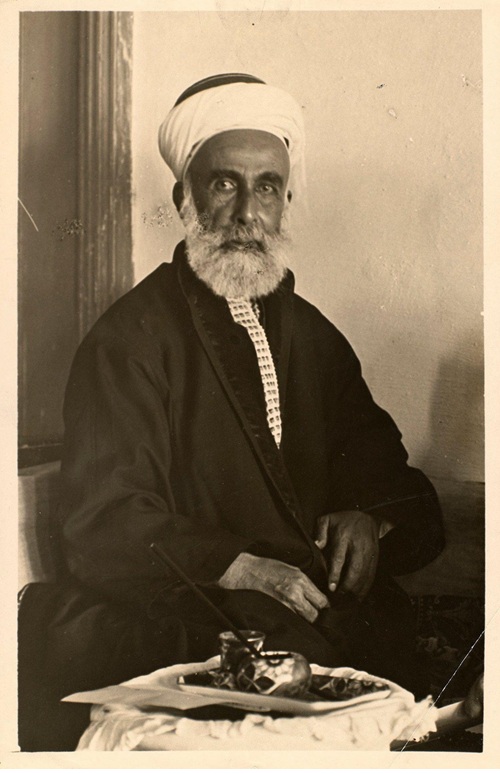
The modern Hashemite story cannot be told without Sharif Hussein bin Ali.
Born in 1853, Sharif Hussein belonged to the Hashemite family whose history had been closely connected with Mecca and the Hijaz for centuries. After periods spent in Istanbul and Mecca, he became Emir of Mecca, placing him in one of the most significant political and religious positions in the Arab world.
By the beginning of the twentieth century, however, the Ottoman Empire was entering a period of profound political change.
Arab intellectuals, political movements and communities across the region were increasingly discussing questions of identity, political representation and independence. The First World War transformed those debates into a struggle that would reshape the Middle East.
For Sharif Hussein, the moment had arrived for action.
The First Shot — 10 June 1916
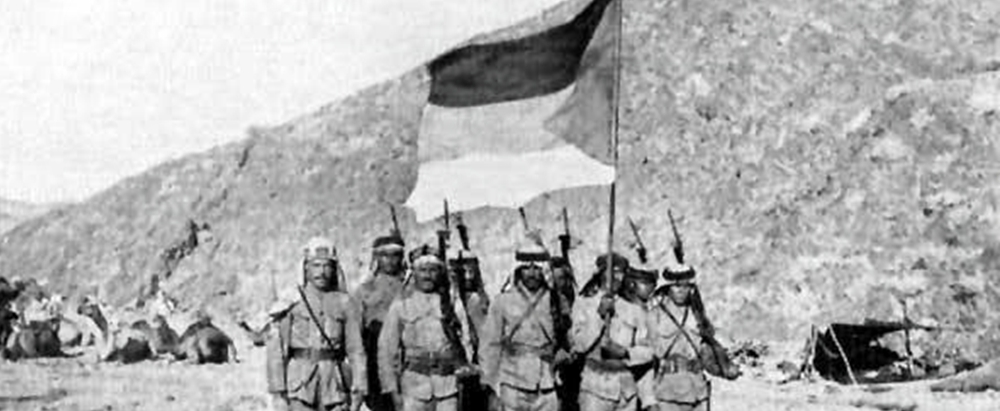
On 10 June 1916, Sharif Hussein bin Ali launched the Great Arab Revolt against Ottoman rule.
According to the Royal Hashemite Court, Sharif Hussein himself fired the first shot announcing the beginning of the revolt, while military operations were led by his sons Ali, Abdullah, Faisal and Zeid.
What followed was far more than a local uprising in the Hijaz.
Arab forces advanced northward through the region, supported by tribes and fighters who joined the revolt. Railways, military positions and strategic routes became part of a campaign that eventually extended toward the lands of present-day Jordan and Syria.
Sharif Hussein’s sons became central figures in this movement.
Prince Faisal commanded forces that advanced north and entered Damascus in 1918.
Prince Abdullah played an important political and military role during the revolt and would later travel north toward Transjordan—a journey that would ultimately connect the Hashemite family permanently with Jordan.
The political objective behind the revolt was ambitious: Arab independence and the establishment of Arab government after centuries of Ottoman rule.
The dream of one unified Arab state would not emerge from the First World War as Sharif Hussein and many Arab nationalists had hoped. European mandates, competing wartime agreements and new political boundaries instead transformed the region.
But the Great Arab Revolt changed Arab history nonetheless.
Out of its aftermath emerged new Hashemite political roles in Syria, Iraq and, most enduringly, Jordan.
The Hashemite Princes and a Changing Arab World
The four sons of Sharif Hussein—Ali, Abdullah, Faisal and Zeid—carried the Hashemite story into the political landscape created after the First World War.
Faisal briefly became king of the Arab government established in Syria before later becoming King of Iraq.
Abdullah’s path would lead elsewhere.
After the collapse of Faisal’s government in Damascus, Abdullah travelled north from the Hijaz and arrived in Ma’an in 1920.
His arrival would become one of the defining moments in the history of modern Jordan.
Within months, Abdullah moved toward Amman.
In 1921, the Emirate of Transjordan was established under Emir Abdullah bin Al Hussein.
The Hashemite story had found a new home.
And from that moment onward, the history of the Hashemite family and the history of modern Jordan would become increasingly difficult to separate.
From the Revolt’s Banner to Jordan’s Flag
The legacy of the Great Arab Revolt is still visible across Jordan today.
Perhaps nowhere is that connection more immediately recognizable than in the Jordanian flag.
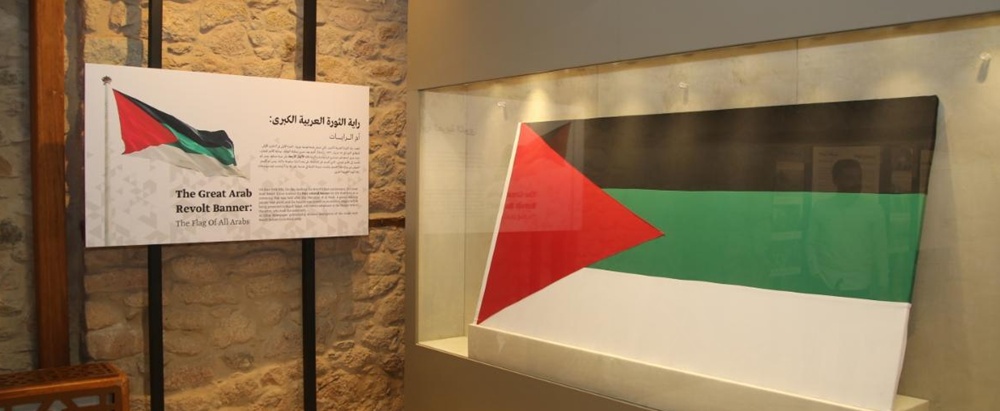
The Great Arab Revolt banner brought together black, white, green and red—colours carrying historical associations with Arab and Islamic dynasties and the Hashemite tradition.
When Jordan developed its own flag, that heritage remained.
The Jordanian flag in its current form began to be used in 1922 and was officially adopted under the Basic Law of the Emirate of Transjordan in 1928. Its colours and basic design were inspired by the banner of the Great Arab Revolt, while the arrangement evolved into the flag recognized around the world today.
The black, white and green horizontal bands are joined by the distinctive red triangle of the Hashemite tradition.
At its center stands the white seven-pointed star.
The Royal Hashemite Court explains that the seven points symbolize the seven verses of Surat Al Fatiha, the opening chapter of the Holy Quran.
This means that when visitors see the Jordanian flag flying above Amman’s Citadel, across the streets of the capital, above military installations or over buildings throughout the Kingdom, they are seeing more than a national symbol.
They are also seeing an echo of the Great Arab Revolt and of the historical journey that preceded the creation of modern Jordan.
A Legacy That Reached Jordan
Sharif Hussein bin Ali never became a king of Jordan.
Yet without his story, the emergence of the Hashemite Kingdom cannot fully be understood.
The revolt he launched brought his sons to the forefront of a new Arab political era. One of those sons—Abdullah—would establish the Hashemite monarchy in Transjordan and begin building the institutions of the state that would eventually become the Hashemite Kingdom of Jordan.
Sharif Hussein therefore stands at the beginning of the modern Hashemite journey we are following.
The next chapter belongs to his son.
Emir Abdullah arrived in a land where the institutions of a modern state were still taking shape.
He would spend the next three decades helping build one.
KING ABDULLAH I
KING ABDULLAH I: FOUNDER OF MODERN JORDAN
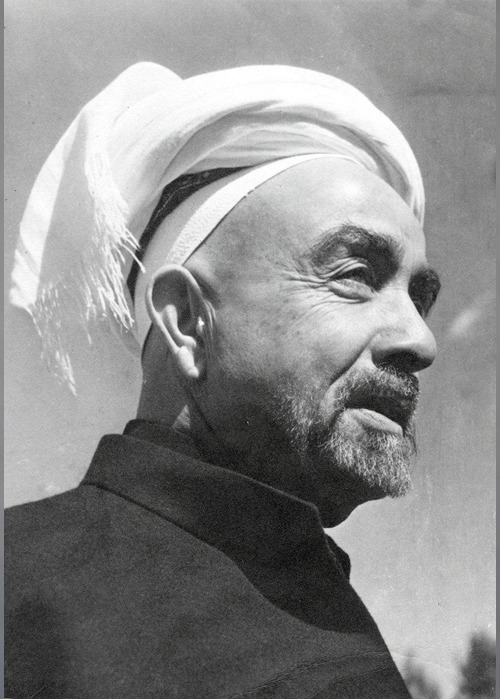
When Prince Abdullah bin Al Hussein arrived in Ma’an on 21 November 1920, the modern Jordanian state did not yet exist.
The lands east of the Jordan River contained towns, villages, tribal communities and local administrations, while the political map of the region was still being reshaped after the collapse of the Ottoman Empire and the First World War.
Prince Abdullah arrived at a moment of uncertainty.
He would leave behind a Kingdom.
From Ma’an to Amman
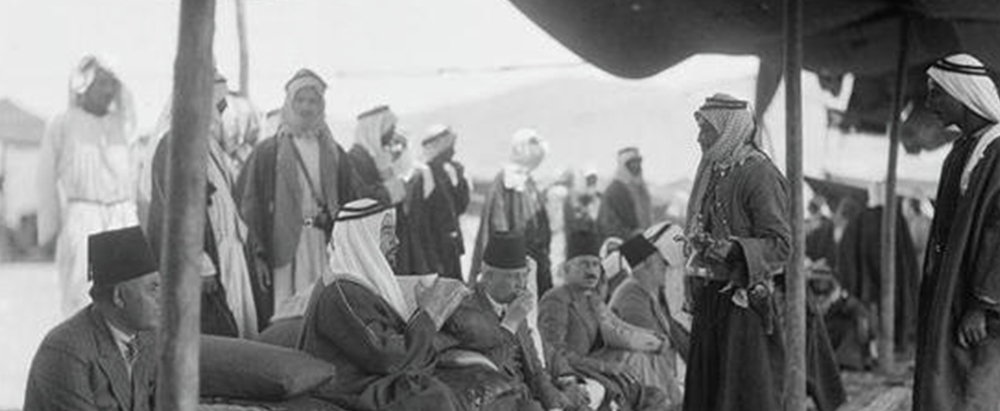
Abdullah was born in Mecca on 4 April 1882, the son of Sharif Hussein bin Ali. Educated in Mecca and Istanbul, he developed political experience before becoming one of the leading figures of the Great Arab Revolt.
Following the collapse of the Arab government in Damascus after the Battle of Maysaloun in July 1920, Abdullah left the Hijaz and travelled north.
He reached Ma’an on 21 November 1920.
There, he established his headquarters in a building associated with the Hejaz Railway station. Delegations and political figures from Transjordan met him and encouraged him to continue north.
On 2 March 1921, Prince Abdullah arrived in Amman.
That journey—Ma’an to Amman—became one of the defining journeys in Jordanian history.
Later that month, Abdullah met British Colonial Secretary Winston Churchill in Jerusalem. The political arrangements that followed recognised an administration in Transjordan under Abdullah’s leadership within the framework of the British Mandate.
The Emirate of Transjordan began to take shape.
On 11 April 1921, Jordan’s first government was formed.
A new chapter had begun.
Building a State
The challenge facing Emir Abdullah was not simply to govern territory.
It was to build the foundations of a state.
Government institutions had to be established and developed. Administration had to reach communities across the country. Security had to be maintained, infrastructure expanded and relationships built among the towns, villages and tribes that formed the emerging Emirate.
Amman, still a relatively small town at the beginning of Abdullah’s rule, gradually developed into the political and administrative center of Transjordan.
The institutions of government grew with it.
The armed forces that would become the Jordan Armed Forces–Arab Army developed during this formative period. Government departments, legal institutions and political structures evolved as the Emirate gradually acquired the characteristics of a modern state.
Abdullah also encouraged political and intellectual life.
Raghadan Palace, completed in Amman in 1927, became not only a Royal residence but a place where poets, writers, political figures and intellectuals gathered. King Abdullah himself was known for his interest in Arabic literature and poetry.
The Jordan emerging around him was still young.
But its foundations were becoming stronger.
From Emirate to Kingdom
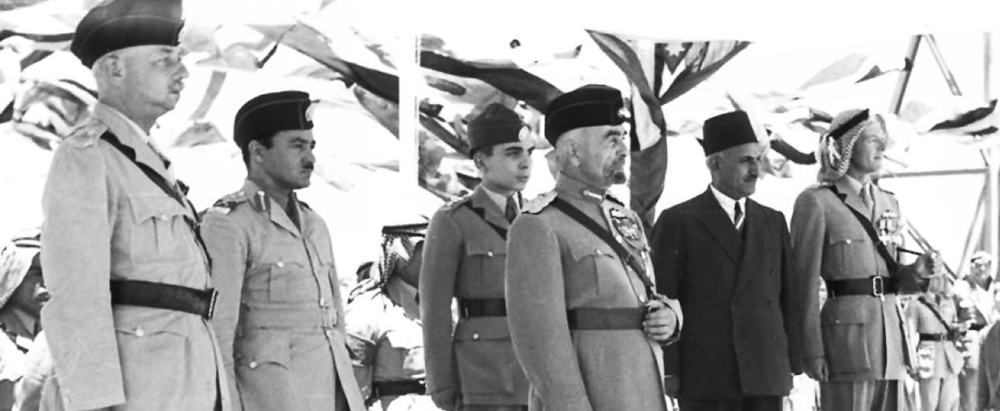
For twenty-five years, Abdullah led Transjordan through the difficult process of state formation.
Then came the defining political achievement of his reign.
On 25 May 1946, Jordan achieved full independence.
Prince Abdullah was proclaimed King, and the country entered a new era as an independent Hashemite Kingdom.
The date remains one of the most important on Jordan’s national calendar.
Every year on 25 May, Jordanians celebrate Independence Day—not simply as the anniversary of a political declaration, but as the culmination of the long process through which the Emirate became a sovereign state.
The Prince who had arrived in Ma’an in 1920 was now King Abdullah I, founder of an independent Kingdom.
Jerusalem and the Founding King
King Abdullah I’s story was also deeply connected with Jerusalem.
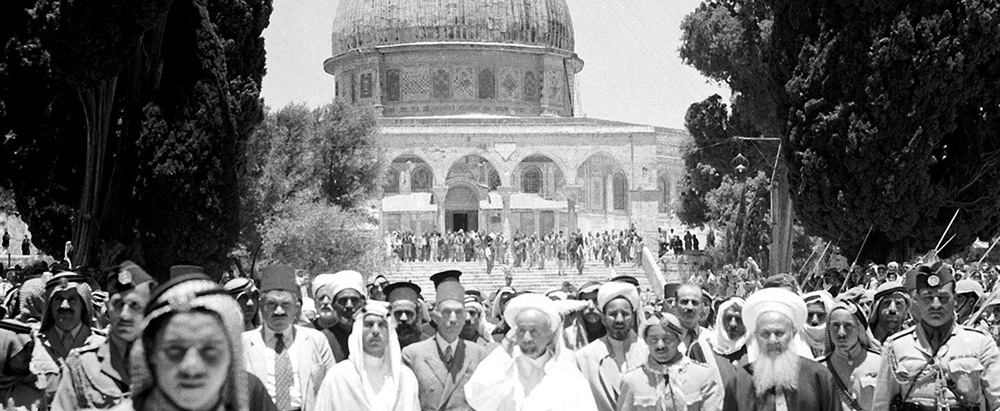
During his reign, the Hashemite responsibility toward Jerusalem’s holy places continued to develop. Abdullah personally supervised restoration work connected with Al-Aqsa Mosque and supported efforts to preserve holy sites affected by conflict.
After parts of Jerusalem’s Old City and holy sites were damaged during the 1948 war, the King visited Al-Aqsa and supported restoration work. In 1949, he personally assisted efforts to extinguish a fire that damaged part of the Church of the Holy Sepulchre.
These actions formed part of a Hashemite relationship with Jerusalem that would continue through subsequent generations.
For King Abdullah I, however, Jerusalem would also become the place where his life ended.
20 July 1951
On Friday, 20 July 1951, King Abdullah I travelled to Jerusalem to perform Friday prayers at Al-Aqsa Mosque.
His young grandson, the future King Hussein bin Talal, accompanied him.
As King Abdullah approached Al-Aqsa, he was assassinated.
The founding King of Jordan died at one of the places most closely connected with the Hashemite family’s religious and historical responsibilities.
His death brought an extraordinary era to an abrupt end.
Thirty-one years had passed since his arrival in Ma’an.
During those decades, Abdullah had travelled from prince and revolutionary leader to Emir and finally King of an independent Jordan.
The political map around him had changed dramatically.
So had Jordan.
The Founder’s Legacy
King Abdullah I left behind much more than a throne.
He left the foundations of a state.
The institutions established and developed during his rule provided the framework upon which later generations would continue building. Amman had become the capital of an emerging nation. Jordan had achieved independence. The Hashemite monarchy had become firmly connected with the country’s political identity.
But the Kingdom’s story was far from complete.
The assassination of the founding King created a moment of profound uncertainty.
Responsibility would pass to his son, Talal.
King Talal’s reign would be brief—but one document completed during that short period would become one of the most important foundations of Jordanian political life.
The Constitution of 1952.
King Talal bin Abdullah
KING TALAL: A SHORT REIGN, AN ENDURING CONSTITUTION
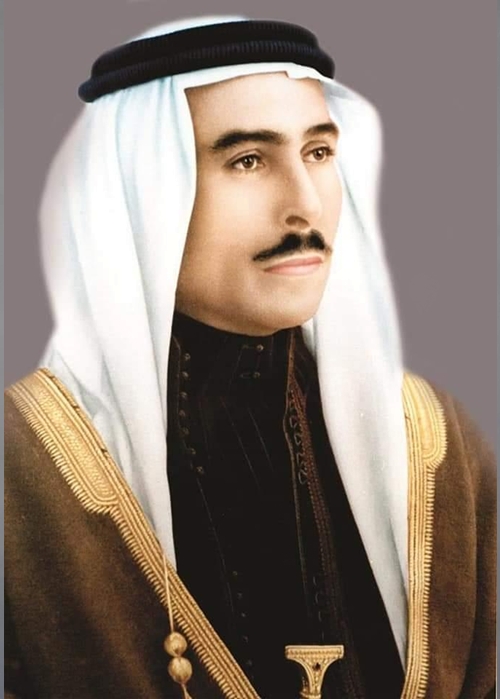
The death of King Abdullah I in Jerusalem in July 1951 brought Jordan’s founding era to an abrupt end.
The responsibility for the young Kingdom now passed to his eldest son, Talal bin Abdullah.
King Talal’s reign would be the shortest in Jordan’s Hashemite history.
Yet its length does not reflect its importance.
During this brief period, Jordan adopted the Constitution of 1952—a document that established fundamental principles of the Kingdom’s political system and continues to form the constitutional foundation of the Jordanian state today.
From Mecca to the Arab Legion
Talal bin Abdullah was born in Mecca on 26 February 1909, the eldest son of Abdullah bin Al Hussein and Musbah bint Nasser.
His early life unfolded during a period of enormous change for the Hashemite family and the Arab world. The Great Arab Revolt, the collapse of Ottoman rule and the establishment of the Emirate of Transjordan transformed the political environment in which he grew up.
Like later generations of the Hashemite family, Talal received military training in Britain.
He graduated from the Royal Military College Sandhurst in 1929 before returning to serve in the Arab Legion, the force that would eventually develop into the Jordan Armed Forces–Arab Army.
His experience therefore connected him both with the Hashemite family’s military tradition and with the institutions of the emerging Jordanian state his father was building.
Becoming King
Following the assassination of King Abdullah I, Prince Talal was proclaimed King of the Hashemite Kingdom of Jordan.
He assumed his constitutional powers on 6 September 1951.
Jordan was still a very young country.
Only five years had passed since independence, and the Kingdom was dealing with the political and social consequences of the 1948 Arab-Israeli war, major demographic changes and the challenge of strengthening institutions capable of governing an expanding population.
King Talal inherited responsibility during this difficult moment.
His reign would last less than a year.
But during those months, one achievement would become central to his historical legacy.
The Constitution of 1952
On 1 January 1952, Jordan’s new Constitution was adopted.
It established Jordan as a hereditary parliamentary monarchy and set out the framework governing the relationship among the country’s constitutional authorities.
The Constitution defined the powers and responsibilities of the state while establishing important principles concerning the rights and duties of Jordanians.
It affirmed equality before the law and addressed fundamental freedoms and political participation within the constitutional framework of the Kingdom.
It also established the institutional structure through which legislative, executive and judicial authority would operate.
For a country that had achieved independence only a few years earlier, the Constitution represented an important stage in the development of Jordan’s modern political institutions.
And unlike many documents produced during the turbulent political history of the twentieth-century Middle East, the 1952 Constitution endured.
It remains the foundation of Jordan’s constitutional order, although it has been amended numerous times as the Kingdom and its institutions have evolved.
That gives King Talal’s short reign a lasting place in Jordanian history.
A Reign Cut Short
King Talal’s health increasingly affected his ability to carry out the responsibilities of the throne.
In August 1952, the Jordanian Parliament determined that he was unable to continue exercising his constitutional duties for health reasons.
His eldest son, Hussein bin Talal, was proclaimed King on 11 August 1952.
Hussein was only sixteen years old.
Because he had not yet reached the constitutional age required to exercise his full powers, a Regency Council governed until he came of age.
On 2 May 1953, King Hussein assumed his constitutional powers.
King Talal lived away from public life for many years afterward and died in Istanbul on 7 July 1972.
The Legacy of a Brief Reign
History is not always measured by the number of years a monarch remains on the throne.
King Talal’s reign demonstrates that clearly.
He inherited a young Kingdom at a difficult moment, ruled for only a short period, and left behind a constitutional framework that would outlive his reign by generations.
The Constitution of 1952 became part of the institutional foundation upon which his son would govern Jordan for nearly half a century.
And that son would inherit challenges unlike anything the young Kingdom had yet experienced.
King Hussein bin Talal would come to the throne as a teenager.
By the end of his reign, he would have become one of the longest-serving and most consequential leaders in Jordan’s modern history.
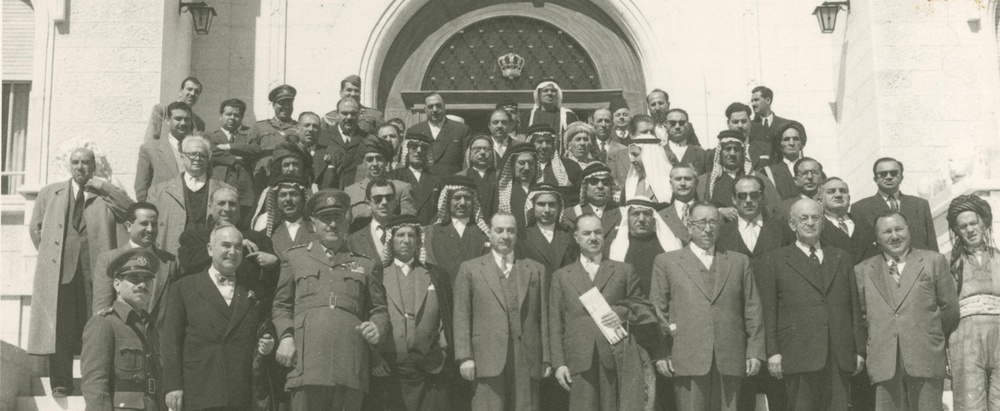
KING HUSSEIN
KING HUSSEIN: THE BUILDER KING
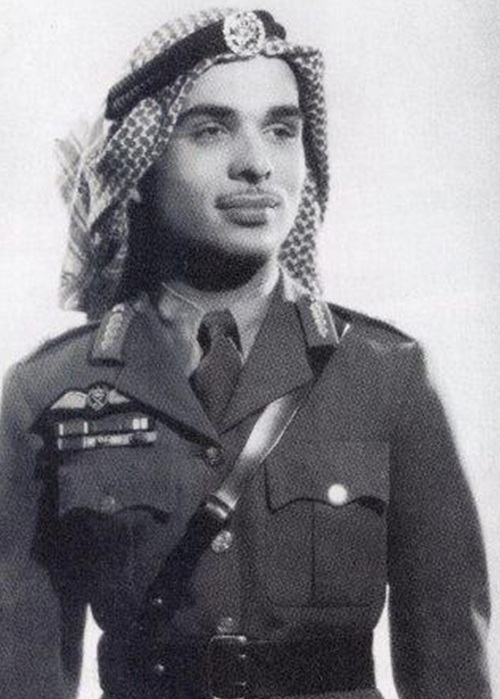
When Hussein bin Talal was proclaimed King of Jordan on 11 August 1952, he was still a teenager.
The Kingdom he inherited was itself young.
Jordan had achieved independence only six years earlier. Its institutions were still developing, its economy had limited resources, and the political landscape surrounding it was among the most complex in the world.
Yet the young King would remain on the throne for nearly forty-seven years.
During that extraordinary period, Jordan would experience wars, regional upheaval, economic challenges and profound social change. It would also build roads, schools, universities, hospitals, industries and institutions that transformed everyday life across the Kingdom.
For generations of Jordanians, King Hussein would become one of the defining figures of modern Jordan.
A Young King Takes Responsibility
Hussein bin Talal was born in Amman on 14 November 1935, the eldest son of King Talal bin Abdullah and Queen Zein Al Sharaf.
His childhood brought him close to his grandfather, King Abdullah I, the founder of Jordan.
That relationship would shape his life profoundly.
On 20 July 1951, the fifteen-year-old Prince Hussein accompanied his grandfather to Jerusalem for Friday prayers at Al-Aqsa Mosque.
There, he witnessed King Abdullah’s assassination.
Little more than a year later, following King Talal’s departure from the throne for health reasons, Hussein was proclaimed King.
Because he had not yet reached the constitutional age required to exercise his powers, a Regency Council governed temporarily.
On 2 May 1953, King Hussein formally assumed his constitutional responsibilities.
He was seventeen years old by the Gregorian calendar.
A teenager now carried responsibility for an entire Kingdom.
Strengthening Jordanian Sovereignty
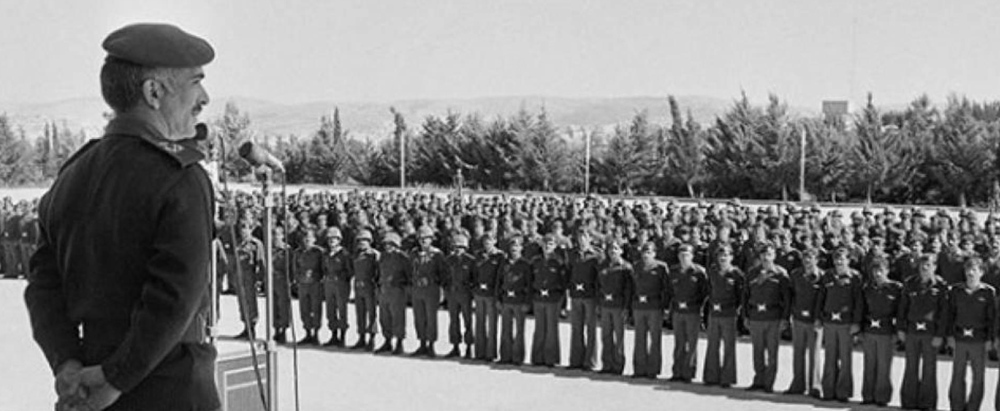
One of the defining decisions of King Hussein’s early reign came on 1 March 1956.
The young King ordered the Arabization of the command of the Arab Army.
Until then, senior command positions—including that of Lieutenant General John Bagot Glubb, widely known as Glubb Pasha—remained in British hands.
King Hussein’s decision replaced the foreign command with Jordanian Arab officers.
For a Kingdom that had achieved formal independence only a decade earlier, the decision carried enormous national significance.
It represented a further assertion of Jordanian sovereignty and placed command of the country’s armed forces firmly in Jordanian hands.
The Arabization of the Army became one of the defining moments of King Hussein’s early reign and remains an important milestone in Jordan’s national history.
Building Modern Jordan
King Hussein’s reign was not defined only by the political crises surrounding Jordan.
Much of his legacy can also be seen in the transformation that took place inside the country.
The King’s guiding principle was expressed in a phrase that became closely associated with his reign:
“Our most precious asset is the individual citizen.”
That philosophy placed human development at the center of Jordan’s modernization.
During the decades that followed, Jordan expanded its educational system, healthcare services, electricity and water networks, roads, communications and public institutions.
Industries including phosphate, potash and cement developed during the 1960s, while a growing highway network connected communities across the Kingdom.
Education expanded dramatically.
Schools reached communities that previously had limited access to formal education. Universities and colleges grew, and literacy rose substantially over the course of the King’s reign.
For a country with few natural resources, investment in people became one of Jordan’s most important development strategies.
The idea was simple but consequential:
If Jordan could not depend upon vast reserves of oil or other natural wealth, it would have to invest in the knowledge, abilities and resilience of its people.
That philosophy remains deeply embedded in Jordan’s national development story.
From Towns and Villages to a Modern Kingdom
The Jordan King Hussein inherited in the early 1950s looked very different from the country he would leave behind.
Amman expanded from a relatively modest capital into a major regional city.
Roads connected previously isolated communities.
Electricity, water, sanitation, schools and healthcare reached an increasing proportion of the population.
New industries provided employment and helped diversify the economy.
Universities produced generations of doctors, engineers, teachers, administrators and professionals who would contribute not only to Jordan but across the Arab world.
The transformation was gradual and often difficult. Jordan faced limited resources, population growth, refugee movements and repeated regional instability.
Yet state-building continued.
King Hussein’s long reign gave Jordan something particularly valuable in a turbulent region: continuity.
A King Among His People
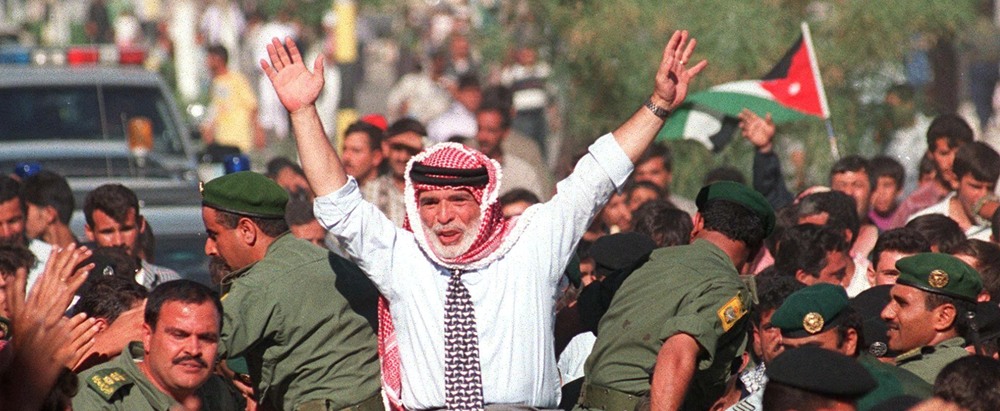
King Hussein’s relationship with Jordanians became another defining feature of his reign.
He travelled extensively around the Kingdom, visiting towns, villages, military units, schools, development projects and tribal communities.
His personal style helped create an image of a monarch who sought direct contact with citizens rather than remaining distant from everyday life.
Among Jordanians he became widely associated with the expression Al-Malik Al-Insan—“The Humane King.”
His interests also made him an unusually recognizable personality.
King Hussein was an accomplished pilot and an enthusiastic motorcyclist and sportsman. He was also well known internationally among amateur radio operators by his call sign, JY1.
These details may appear small beside the wars and political crises of his reign, but they contributed to the personal connection many Jordanians felt toward him.
For nearly half a century, King Hussein was not simply the country’s monarch.
For many Jordanians, he became part of the lived memory of modern Jordan.

A Kingdom Tested
But Jordan’s modernization did not take place in isolation.
Around the Kingdom, the Middle East was experiencing revolutions, coups, wars and ideological struggles.
Jordan would soon face some of the most difficult moments in its history.
The 1967 Arab-Israeli War would dramatically alter Jordan’s geography and population.
The Battle of Karameh in 1968 would become an important moment in Jordanian military history.
The crisis of 1970 would threaten stability inside the Kingdom itself.
And through the decades that followed, King Hussein would increasingly pursue another objective—finding a path from conflict toward peace.
The Builder King would also have to become a king of war, survival and diplomacy.
King Hussein — War, Peace and the Survival of Jordan
Building a modern state was only one part of the challenge King Hussein faced.
Jordan occupied one of the most politically sensitive positions in the Middle East. Its borders, population, relationship with the Palestinian people and proximity to the Arab-Israeli conflict meant that regional events could have profound consequences for the Kingdom.
Few periods demonstrated this more clearly than the late 1960s.
Jordan experienced war, territorial loss, population displacement and enormous economic and social pressures. Yet the Kingdom continued developing its institutions and infrastructure while navigating an extraordinarily difficult regional environment.
These experiences would also influence King Hussein’s growing determination to pursue peace through diplomacy.
The Six-Day War of 1967
In June 1967, war erupted between Israel and neighboring Arab states.
Jordan entered the conflict alongside Egypt and Syria.
The fighting lasted only six days, but its consequences transformed Jordan and the wider region.
Israeli forces captured the West Bank and East Jerusalem, territories that had been under Jordanian administration. Jordanian forces suffered significant losses, while another major movement of displaced Palestinians crossed eastward into Jordan.
For King Hussein, the consequences were enormous.
Jordan had lost territory, soldiers had been killed, communities had been displaced and Jerusalem—a city deeply connected with the Hashemite legacy—had been transformed by war.
In the aftermath, diplomatic efforts increasingly focused on finding a political framework capable of addressing the consequences of the conflict.
United Nations Security Council Resolution 242, adopted in November 1967, became one of the principal foundations for subsequent Arab-Israeli peace negotiations.
For King Hussein, the experience of 1967 would become part of a much longer journey from military confrontation toward diplomacy.
The Battle of Karameh
Less than a year later, Jordan again became a battlefield.
On 21 March 1968, Israeli forces crossed the Jordan River and launched a major military operation in the Jordan Valley, including around the town of Karameh.
The Jordanian Armed Forces–Arab Army fought the attacking forces in a battle that became deeply embedded in Jordanian national memory.
Jordan suffered casualties, but its forces resisted the incursion, and the Israeli forces ultimately withdrew across the river.
For a country still carrying the psychological and military consequences of the 1967 war, Karameh assumed significance far beyond the battlefield.
It became a powerful symbol of courage, determination and national resilience.
The battle remains commemorated in Jordan as one of the defining moments in the history of the Arab Army.
Moving Forward Through a Changing Region
Jordan entered the following decades carrying the consequences of war, territorial loss, population displacement and continuing regional instability.
Yet the process of building the Kingdom continued.
Throughout the 1970s and 1980s, Jordan expanded education, healthcare, infrastructure and public services while adapting to demographic growth and economic pressures.
Amman continued to expand. Universities educated new generations of Jordanians. Roads and communications connected communities across the Kingdom, while the country’s institutions became increasingly established.
King Hussein also continued searching for diplomatic solutions to the Arab-Israeli conflict.
The experiences of war increasingly reinforced his conviction that military confrontation alone could not resolve the underlying political disputes of the region.
However difficult the path might be, diplomacy and negotiation would become increasingly central to his pursuit of peace.
Political Opening at Home
The late 1980s brought another important turning point in Jordan’s development.
Economic difficulties and public pressure for political change were followed by parliamentary elections in 1989, marking an important reopening of political life after a long period in which parliamentary activity had been constrained by regional circumstances.
The process continued with the National Charter, endorsed in 1991, which helped establish a framework for political pluralism, participation and relations among different political forces within the Kingdom.
Jordan’s political system would continue evolving in the decades ahead, but the changes beginning in 1989 represented an important chapter in the development of the country’s modern political institutions.
At the same time, another historic process was beginning beyond Jordan’s borders.
From Madrid to Peace
In October 1991, representatives from across the region gathered in Spain for the Madrid Peace Conference.
Jordan participated in the process alongside a joint Jordanian-Palestinian delegation, opening a new chapter of formal negotiations.
For King Hussein, Madrid represented an opportunity to pursue through diplomacy what decades of conflict had failed to achieve: a more stable regional order based on negotiation rather than continuing warfare.
Years of negotiations followed.
Then, on 26 October 1994, Jordan and Israel signed a peace treaty at Wadi Araba.
King Hussein and Israeli Prime Minister Yitzhak Rabin stood together at the ceremony, with United States President Bill Clinton among those present.
Jordan became the second Arab country, after Egypt, to sign a peace treaty with Israel.
The agreement formally ended the state of war between Jordan and Israel, defined their international boundary and established arrangements concerning areas including security and water.
For King Hussein, the treaty represented the culmination of decades spent moving between war and diplomacy.
Yet he continued to emphasize that peace in the wider region could not be complete without resolving the Palestinian question and achieving a comprehensive settlement.
A King Known Beyond Jordan
By the 1990s, King Hussein had become one of the Middle East’s longest-serving and most internationally recognized leaders.
He had personally known generations of Arab, Israeli, American, European and international leaders and had experienced almost every major regional transformation since the early 1950s.
His longevity gave him something increasingly rare in international diplomacy: memory.
King Hussein had lived through the conflicts being negotiated.
He understood their history personally.
And relationships developed over decades often allowed him to communicate across political divides that appeared almost impossible to bridge.
This ability to maintain dialogue with different sides became an important element of his international reputation.
But his greatest responsibility remained Jordan.
The King’s Final Years
By the late 1990s, King Hussein’s health was deteriorating.
He underwent treatment for cancer and spent extended periods receiving medical care abroad.
Even during his illness, however, he remained involved in efforts to advance regional peace.
In October 1998, visibly weakened by treatment, King Hussein participated in negotiations at Wye River in the United States, encouraging Israeli and Palestinian leaders during discussions that resulted in the Wye River Memorandum.
It became one of the final international acts of a monarch who had spent much of his reign trying to move the region from conflict toward negotiation.
King Hussein then returned to Jordan during the final stage of his illness.
7 February 1999
On 7 February 1999, King Hussein died in Amman at the age of 63.
He had ruled Jordan for nearly forty-seven years.
The teenager who had inherited the throne in the early 1950s had become the monarch through whom generations of Jordanians experienced the transformation of their country.
His funeral brought leaders and dignitaries from around the world to Amman and became an extraordinary moment of national mourning.
For Jordanians, however, the loss was deeply personal.
The man widely remembered as Al-Malik Al-Insan—the Humane King—had been present through almost half a century of Jordan’s modern history.
The End of an Era
King Hussein inherited a young Kingdom whose institutions were still developing.
He left behind a country with a greatly expanded educational system, modern infrastructure, established state institutions, an experienced military and diplomatic relationships extending around the world.
His reign witnessed development and crisis, war and peace, difficult choices and extraordinary change.
It was never a simple story.
Perhaps that complexity is precisely why King Hussein occupies such an important place in Jordanian memory.
For almost his entire adult life, he carried responsibility for the Kingdom.
His death marked the end of one of the longest chapters in Hashemite Jordan’s history.
But the Hashemite story did not end with him.
On 7 February 1999, the same day Jordan mourned King Hussein, his eldest son Abdullah bin Al Hussein assumed his constitutional powers as King Abdullah II.
Jordan was entering a new century.
And a new Hashemite generation was preparing to lead it.
King Abdullah II
King Abdullah II — Carrying the Hashemite Legacy Into a New Century
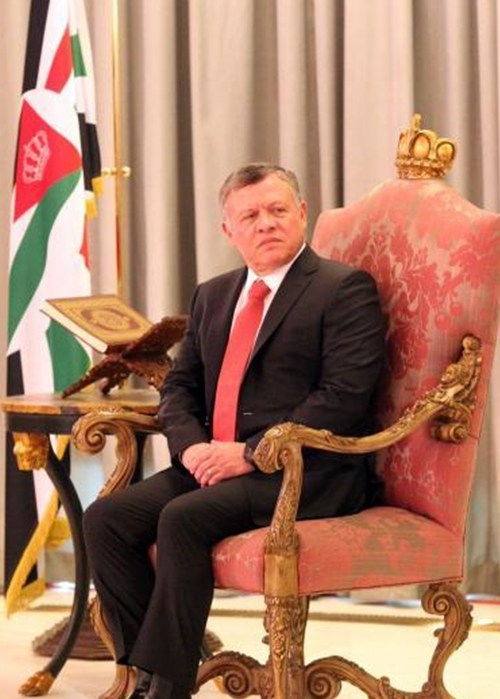
The death of King Hussein on 7 February 1999 marked the end of an extraordinary chapter in Jordan’s history.
On that same day, his eldest son, Abdullah bin Al Hussein, assumed his constitutional powers as King Abdullah II.
The transition carried enormous significance.
King Hussein had been Jordan’s monarch for nearly forty-seven years. Generations of Jordanians had known no other King, and his reign had become inseparable from the development of the modern Kingdom.
King Abdullah II therefore inherited more than the throne.
He inherited a state built across generations, a deeply established relationship between the Hashemite monarchy and the Jordanian people, and responsibility for guiding Jordan into a century that would bring challenges very different from those faced by his father and grandfather.
A New King for a New Century
King Abdullah II was born in Amman on 30 January 1962, the eldest son of King Hussein bin Talal and Princess Muna Al Hussein.
His education in Jordan and abroad was followed by an extensive military career. After training at the Royal Military Academy Sandhurst, he served for years in the Jordan Armed Forces–Arab Army, eventually rising to the rank of major general and commanding Jordan’s Special Forces.
When he became King in 1999, that military background provided one foundation for leadership.
But Jordan was entering a very different world.
The internet and digital technology were transforming economies and societies. Globalization was accelerating. Jordan’s population was growing rapidly, while employment, water scarcity, energy, education and economic opportunity were becoming increasingly important national challenges.
At the same time, the regional environment would soon become dramatically more unstable.
The new King faced the task of preserving Jordan’s stability while preparing the Kingdom for change.
Building on King Hussein’s Legacy
From the beginning of his reign, King Abdullah repeatedly emphasized continuity with the legacy of his father.
But continuity did not mean preserving Jordan exactly as it had been.
The challenge was to build upon the institutions created by earlier Hashemite generations while adapting them to new economic, technological and political realities.
Investment, information technology, education, infrastructure, entrepreneurship and private-sector development increasingly became part of Jordan’s national conversation.
Royal initiatives expanded into areas including education, healthcare, youth, social development and productive projects in communities across the Kingdom.
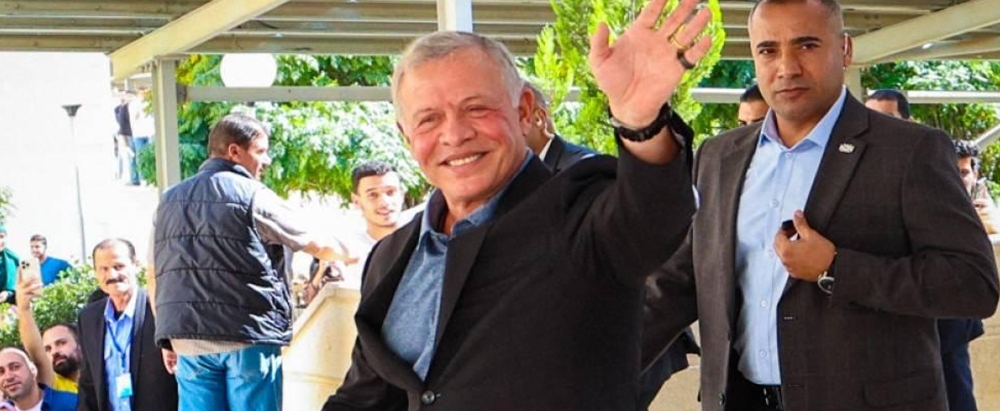
At the same time, King Abdullah continued a tradition strongly associated with King Hussein: travelling throughout Jordan and meeting citizens directly in governorates, towns, villages, Badia communities and refugee camps.
The Hashemite relationship with Jordan was therefore expressed not only through institutions in Amman, but through continued engagement with communities across the country.
Jordan Through a Turbulent Region
The first quarter of the twenty-first century brought extraordinary instability to Jordan’s neighborhood.
The Iraq War transformed the country immediately to Jordan’s east.
The Arab uprisings beginning in 2011 reshaped political systems across the region.
The war in Syria created one of the world’s largest refugee crises, placing enormous additional pressure on Jordan’s schools, hospitals, infrastructure, water resources and communities.
Terrorist organizations and extremist movements created new security threats.
Later came the COVID-19 pandemic, global economic disruption and renewed conflict across the region.
Jordan could not isolate itself from these events.
Its geography made that impossible.
Yet throughout these successive crises, preserving the Kingdom’s security and stability remained a central national priority.
Jordan continued functioning as a state, maintaining its institutions and international relationships while absorbing pressures that would have severely challenged countries with far greater resources.
Resilience became one of the defining themes of the Abdullah II era.
Modernising the Kingdom
As his reign progressed, King Abdullah increasingly emphasized that stability alone was not enough.
Jordan also had to modernise.
Political reform, economic development and public-sector reform became interconnected parts of a broader modernisation process.
In the years surrounding Jordan’s second centennial, new initiatives sought to create a longer-term framework for that transformation.
Political modernisation focused on strengthening parliamentary and party-based political participation, including greater opportunities for women and young people.
The Economic Modernisation Vision set out long-term ambitions for economic growth, investment, employment and improving Jordan’s competitiveness.
Public-sector modernisation sought to improve government services, administration and efficiency.
Together, these tracks reflected a central challenge of King Abdullah’s reign:
How does a country preserve the stability that has protected it through decades of regional turmoil while also changing quickly enough to meet the expectations of a new generation?
For Jordan, modernisation has become part of the answer.

Twenty-Five Years on the Throne
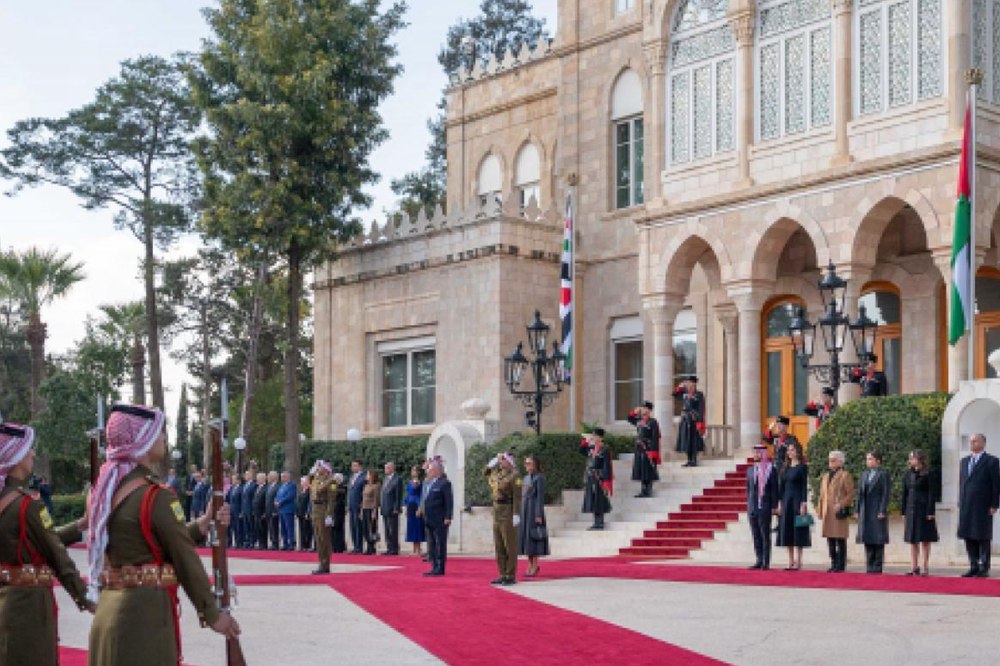
In 2024, Jordan marked the Silver Jubilee of King Abdullah II’s reign.
Twenty-five years had passed since the young King inherited responsibility from King Hussein.
The anniversary provided an opportunity to look back at a period during which Jordan had faced wars on its borders, refugee crises, terrorism, economic shocks, a global pandemic and profound technological change.
But the Silver Jubilee was also presented as a moment to look forward.
The Royal Hashemite Court emphasized that Jordan’s achievements over those twenty-five years were the product of Jordanians themselves and that modernisation and progress would continue into the next stage of the Kingdom’s development.
That idea is important to understanding the Hashemite story.
The monarchy provides continuity across generations.
But the country is built by its people.
The Hashemite Responsibility Beyond Jordan
King Abdullah II also inherited responsibilities extending beyond Jordan’s borders.
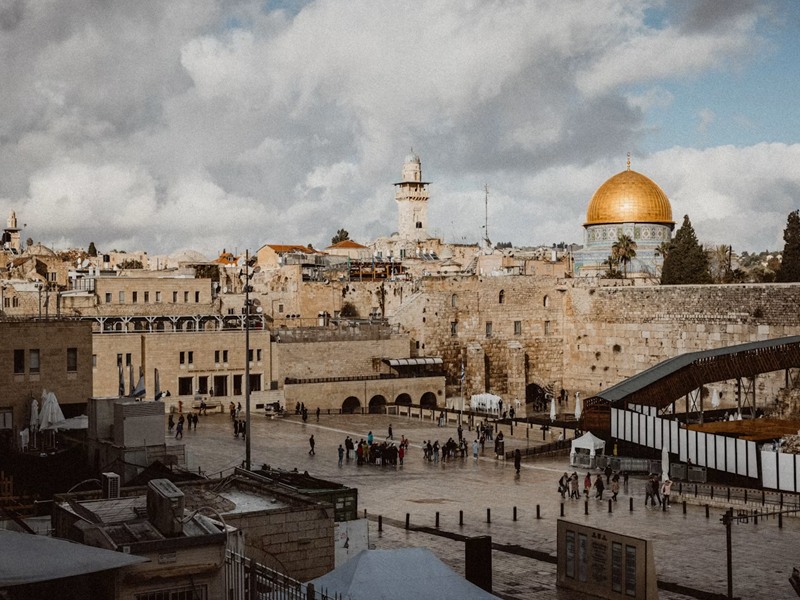
Among the most important is the Hashemite custodianship of Muslim and Christian holy sites in Jerusalem.
The relationship between the Hashemite family and Jerusalem predates the establishment of the modern Jordanian state and has continued across successive generations.
Under King Abdullah II, protection of Jerusalem’s holy sites and preservation of the city’s religious and historical character have remained central elements of Jordan’s regional and international diplomacy.
The King has also promoted interfaith dialogue and efforts to confront extremist interpretations of religion.
In 2004, he launched the Amman Message, an initiative intended to articulate principles of Islam, affirm common ground among recognised Islamic schools of thought and reject illegitimate declarations of apostasy and religious extremism.
These responsibilities connect King Abdullah’s reign with a Hashemite story much older than the modern Kingdom itself.
From One Generation to the Next
The Hashemite legacy is ultimately a story of succession.
Sharif Hussein bin Ali passed a political and historical mission to a generation of sons who helped reshape the modern Arab world.
King Abdullah I established the Hashemite state in Transjordan.
King Talal’s brief reign left Jordan its enduring constitutional foundation.
King Hussein spent almost half a century building, protecting and guiding the Kingdom.
King Abdullah II inherited that accumulated legacy in 1999 and carried it into the twenty-first century.
But another generation is now increasingly visible.
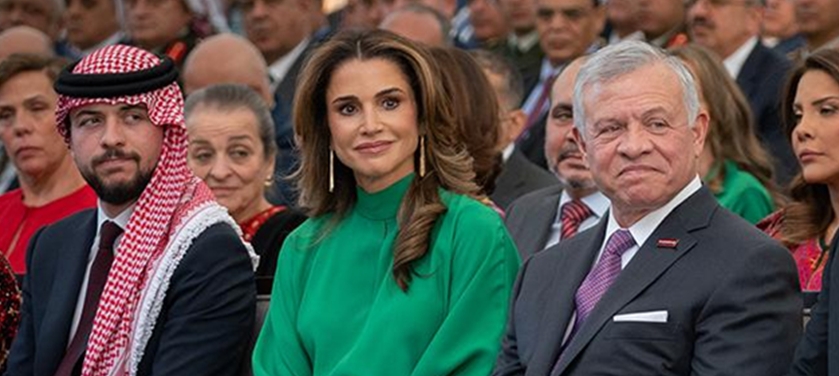
Crown Prince Al Hussein bin Abdullah II has grown into public responsibility during his father’s reign, representing Jordan at home and abroad while focusing much of his work on young people, education, technology, entrepreneurship and preparing Jordan’s next generation.
For the first time in our story, we have reached the present.
And the question is no longer only what the Hashemites inherited from previous generations.
It is what they will pass to the generation that follows.
CROWN PRINCE AL HUSSEIN
CROWN PRINCE AL HUSSEIN: THE NEXT HASHEMITE GENERATION

Every generation in the Hashemite story has inherited something from the generation before it.
Sharif Hussein bin Ali passed the ideals and ambitions of the Great Arab Revolt to his sons.
King Abdullah I transformed that legacy into the foundations of a state in Transjordan.
King Talal helped give the young Kingdom an enduring constitutional framework.
King Hussein spent almost half a century strengthening and protecting Jordan while overseeing its transformation into a modern state.
King Abdullah II carried that accumulated legacy into the twenty-first century.
Today, another generation is preparing for the responsibilities that may one day come with carrying that story forward.
At its center is His Royal Highness Crown Prince Al Hussein bin Abdullah II.
Born Into a Continuing Story
Crown Prince Al Hussein was born in Amman on 28 June 1994, the eldest son of King Abdullah II and Queen Rania Al Abdullah.
When his grandfather King Hussein died in February 1999 and his father became King, Prince Al Hussein was only four years old.
He therefore grew up during the reign of King Abdullah II, watching Jordan navigate a new century marked by technological transformation, regional conflict, economic challenges and profound social change.
On 2 July 2009, a Royal Decree named Prince Al Hussein Crown Prince of Jordan.
He was fifteen years old.
The designation formally placed him within a line of Hashemite succession whose modern Jordanian story stretches back to the arrival of his ancestor Abdullah in Ma’an in 1920.
Preparing for Responsibility
Preparation for Hashemite leadership has traditionally combined education, military service and direct exposure to public responsibility.
Crown Prince Al Hussein has followed that pattern.
After completing his secondary education at King’s Academy in Jordan, he studied International History at Georgetown University in Washington, D.C., graduating in 2016.
The following year, he graduated from the Royal Military Academy Sandhurst in the United Kingdom.
The choice carried particular family significance.
King Abdullah II had trained at Sandhurst before him.
King Hussein had also studied there.
Military education therefore connected three generations: grandfather, father and son.
Crown Prince Al Hussein subsequently continued serving in the Jordan Armed Forces–Arab Army and today holds the rank of major.
But preparation for future responsibility extends beyond military training.
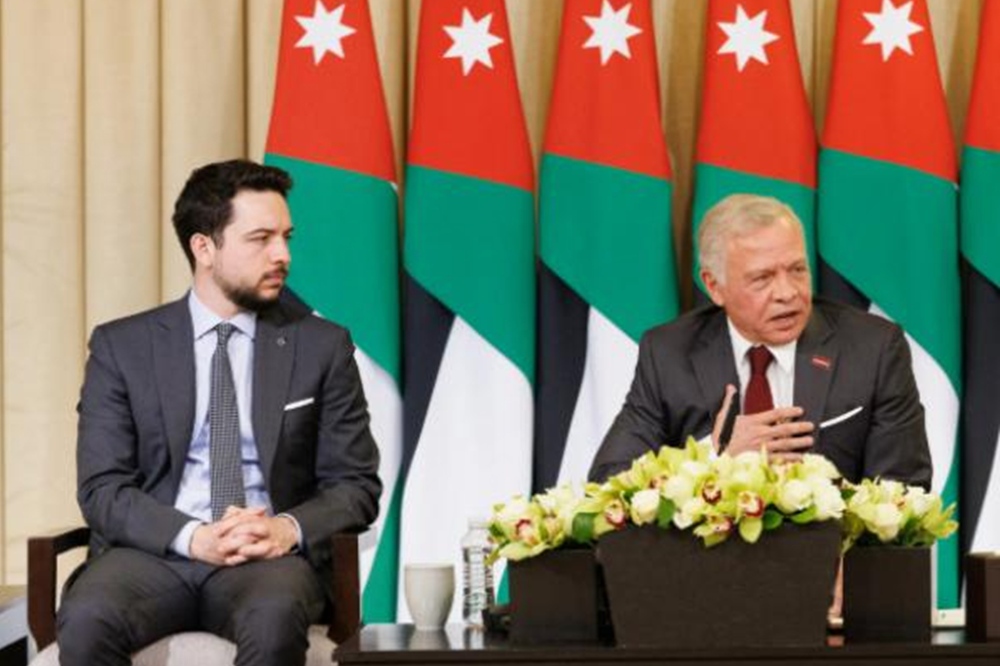
Since being named Crown Prince, Al Hussein has accompanied King Abdullah II during official engagements, visits around Jordan and meetings with international leaders. He has also served as Regent on a number of occasions, temporarily exercising constitutional duties on behalf of the King.
Learning Jordan Through Its People
There is another form of preparation that cannot be acquired in a classroom or military academy.
Understanding Jordan requires understanding Jordanians.
Like King Hussein before him and King Abdullah II today, Crown Prince Al Hussein has spent increasing amounts of his public life travelling throughout the Kingdom and engaging directly with communities.
His activities have brought him into contact with students, soldiers, entrepreneurs, volunteers, teachers, professionals and young people from Jordan’s different governorates.
These encounters provide something particularly important for a future generation of leadership: direct exposure to the ambitions and challenges of the people the monarchy serves.
Jordan is not only Amman.
It is Irbid and Ramtha in the north, Salt and Zarqa in the center, Karak and Tafileh in the south, Aqaba on the Red Sea, the Badia stretching across much of the Kingdom, and hundreds of towns, villages and communities in between.
The Hashemite story has endured partly because successive generations have sought to maintain a relationship with these different parts of Jordan.
For Crown Prince Al Hussein, continuing that relationship forms an important part of preparing for the future.
A Generation With Different Challenges
The Jordan Crown Prince Al Hussein may one day inherit will be very different from the country inherited by King Hussein in 1952 or King Abdullah II in 1999.
Jordan’s next generation will confront challenges created by artificial intelligence, automation, climate change, water scarcity, energy security, demographic pressure and a global economy changing at extraordinary speed.
Young Jordanians will need different skills and opportunities from those required by previous generations.
This helps explain why so much of the Crown Prince’s current work focuses on youth, technical and vocational education, entrepreneurship, information technology and leadership.
The Crown Prince Foundation, established in 2015, has developed programs aimed at helping young Jordanians gain skills and opportunities while strengthening leadership, citizenship, employability and entrepreneurship.
These initiatives are not separate from the Hashemite story.
They represent the contemporary version of a question every generation in this article has faced:
How should Jordan prepare for what comes next?
From Heir to Father
The Hashemite story gained another generation on 1 June 2023, when Crown Prince Al Hussein married Princess Rajwa Al Hussein.
On 3 August 2024, Their Royal Highnesses welcomed their first child, Princess Iman bint Al Hussein.
For a Royal Family whose history we have followed across generations, the moment carries a simple but meaningful symbolism.
The story continues.
Sharif Hussein bin Ali belonged to a world before the establishment of modern Jordan.
His son Abdullah founded the Jordanian Hashemite state.
Talal followed Abdullah.
Hussein followed Talal.
Abdullah II followed Hussein.
And today Crown Prince Al Hussein stands as heir to that accumulated legacy, while another Hashemite generation has already been born.

Continuity Does Not Mean Standing Still
Perhaps the most important lesson of the Hashemite story is that continuity and change are not opposites.
King Abdullah I governed a very different Jordan from King Hussein.
King Hussein governed a very different Jordan from King Abdullah II.
And the Jordan of tomorrow will inevitably differ from the Kingdom we know today.
The institutions change.
Cities grow.
Technology transforms everyday life.
New generations develop new expectations.
The challenges facing the country evolve.
But across more than a century of modern Jordanian history, the Hashemite monarchy has provided a continuous thread connecting these different periods.
Crown Prince Al Hussein represents the next link in that chain.
His story is still being written.
And unlike the generations we have already explored, his chapter belongs not primarily to Jordan’s history—
but to its future.
From the Great Arab Revolt to Modern Jordan — A Legacy That Continues
More than a century separates the Great Arab Revolt from the Jordan we know today.
Across those years, borders changed, governments rose and fell, wars reshaped the Middle East, cities expanded, technology transformed everyday life and generations of Jordanians built lives in a country that itself was still being built.
Through that extraordinary period runs one continuous Hashemite story.
It began, in the modern era, with Sharif Hussein bin Ali and the Great Arab Revolt of 1916—a movement born from aspirations for Arab independence and self-government.
His son Abdullah carried that story north.
When Prince Abdullah arrived in Ma’an in November 1920 and then Amman in March 1921, there was no modern Jordanian state as we recognize it today.
By the time King Abdullah I died three decades later, there was an independent Hashemite Kingdom.
Five Reigns, One Continuing Journey
Each Hashemite monarch inherited a Jordan shaped by the generation before him.
King Abdullah I laid the foundations of the state and guided Transjordan toward independence.
King Talal’s reign was brief, but the Constitution of 1952 became an enduring foundation of Jordan’s constitutional system.
King Hussein inherited the throne as a teenager and spent nearly forty-seven years overseeing the development of the Kingdom through some of the most turbulent decades in modern Middle Eastern history.
Under his reign, Jordan expanded its schools, universities, healthcare, infrastructure, industries and institutions while navigating war, economic challenges and an extraordinarily difficult regional environment.
King Abdullah II inherited that accumulated legacy in 1999.
His Jordan entered a new century facing different challenges: globalization, technological transformation, economic pressures, refugee crises, regional wars, terrorism, water scarcity and the rapidly changing expectations of a young population.
Through those changes, the fundamental challenge remained familiar.
Preserve what gives Jordan stability and identity while preparing the country for a future that will inevitably be different from its past.
Today, Crown Prince Al Hussein represents the generation preparing to carry that responsibility forward.
A Kingdom Built Across Generations
Yet the history of Jordan cannot be explained through its kings alone.
The Kingdom was built by Jordanians.
It was built by soldiers who defended it and public servants who established its institutions.
By teachers who educated generations of children.
By doctors and nurses who developed its healthcare system.
By farmers working the Jordan Valley and the country’s highlands.
By engineers, tradespeople and workers who built roads, cities, industries and infrastructure.
By entrepreneurs who created businesses and employment.
By writers, artists, historians and musicians who helped preserve and develop Jordanian culture.
And by families in Amman, Salt, Irbid, Zarqa, Karak, Tafileh, Ma’an, Aqaba, Mafraq, Madaba, Jerash, Ajloun, the Badia and communities throughout the Kingdom.
The Hashemite monarchy provided continuity across generations.
The Jordanian people gave that continuity a country to build.
More Than a Century of Change
The difference between the Jordan encountered by Prince Abdullah in 1920 and the Kingdom of today is extraordinary.
Amman grew from a small town into a sprawling modern capital.
Roads connected the north and south.
Universities emerged.
Hospitals expanded.
Airports connected Jordan with the world.
Electricity, telecommunications and digital services transformed daily life.
Industries developed around Jordan’s natural resources and human talent.
Petra became one of the world’s most recognized archaeological destinations, while Wadi Rum, the Dead Sea, Jerash, Aqaba and countless other places introduced millions of visitors to Jordan’s extraordinary natural and cultural heritage.
But modernization did not erase the country’s identity.
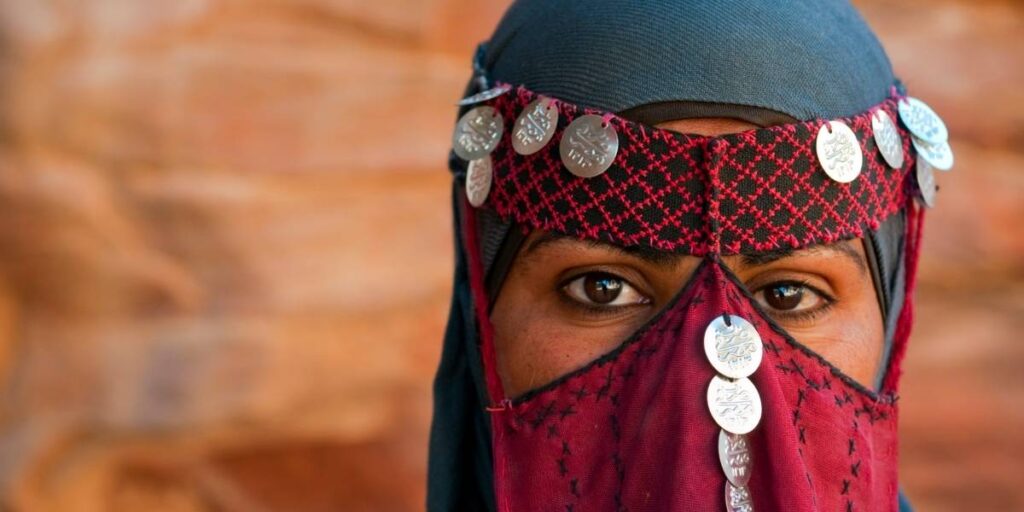
Jordanian hospitality, tribal traditions, family relationships, Bedouin heritage, religious traditions, local food, music, crafts and attachment to the land remain important parts of the Kingdom’s character.
Modern Jordan therefore carries several histories simultaneously.
Ancient civilizations beneath its soil.
Arab and Islamic heritage stretching across centuries.
The memory of the Great Arab Revolt.
The development of the Hashemite Kingdom.
And the ambitions of a new generation looking toward the future.
The Hashemite Legacy
What, then, is the Hashemite legacy?
It is not a single event, building or reign.
It is a story of continuity.
From Sharif Hussein bin Ali came the Great Arab Revolt and the modern political journey of the Hashemite family.
From King Abdullah I came the foundations of the Jordanian state.
From King Talal came an enduring constitutional milestone.
From King Hussein came almost half a century of state-building, resilience and the pursuit of peace.
From King Abdullah II comes the responsibility of carrying Jordan through the challenges and transformations of the twenty-first century.
And in Crown Prince Al Hussein stands the generation preparing for what comes next.
Different generations.
Different challenges.
One continuing Hashemite story.
The Story Is Still Being Written
For visitors, understanding this history adds another dimension to discovering Jordan.
The palaces of Amman, the Great Arab Revolt memorials, the Hejaz Railway, the country’s military museums, the streets of the capital and the Jordanian flag itself all carry pieces of this story.
But its deepest legacy cannot be found only in monuments.
It can be seen in the country that emerged across these generations.
A Kingdom that has endured extraordinary regional change.
A society that has repeatedly absorbed new challenges while preserving a strong sense of identity.
And a people whose story remains at the center of Jordan’s past, present and future.
More than a century after Prince Abdullah arrived in Ma’an, the Hashemite journey in Jordan continues.
Behind today’s Kingdom stand generations who built it.
At its heart stand the Jordanian people.
And ahead lies another chapter still waiting to be written.

Continue the Story → The Hashemites and Jerusalem: A Legacy of Custodianship and Holy Sites