
Petra is not one monument—it is an entire Nabataean city spread across sandstone valleys, cliffs, stairways, and mountain trails. The famous walk through the Siq to the Treasury is only the beginning. Beyond it are royal tombs, temples, a theatre, ancient water channels, viewpoints, and the Monastery, all revealing the scale and sophistication of Jordan’s most celebrated archaeological site.
This complete Petra travel guide explains what to see, how long to stay, which routes suit different visitors, when to go, what to carry, and how to plan one, two, or three days without turning the experience into a race.
Why Petra Is Extraordinary
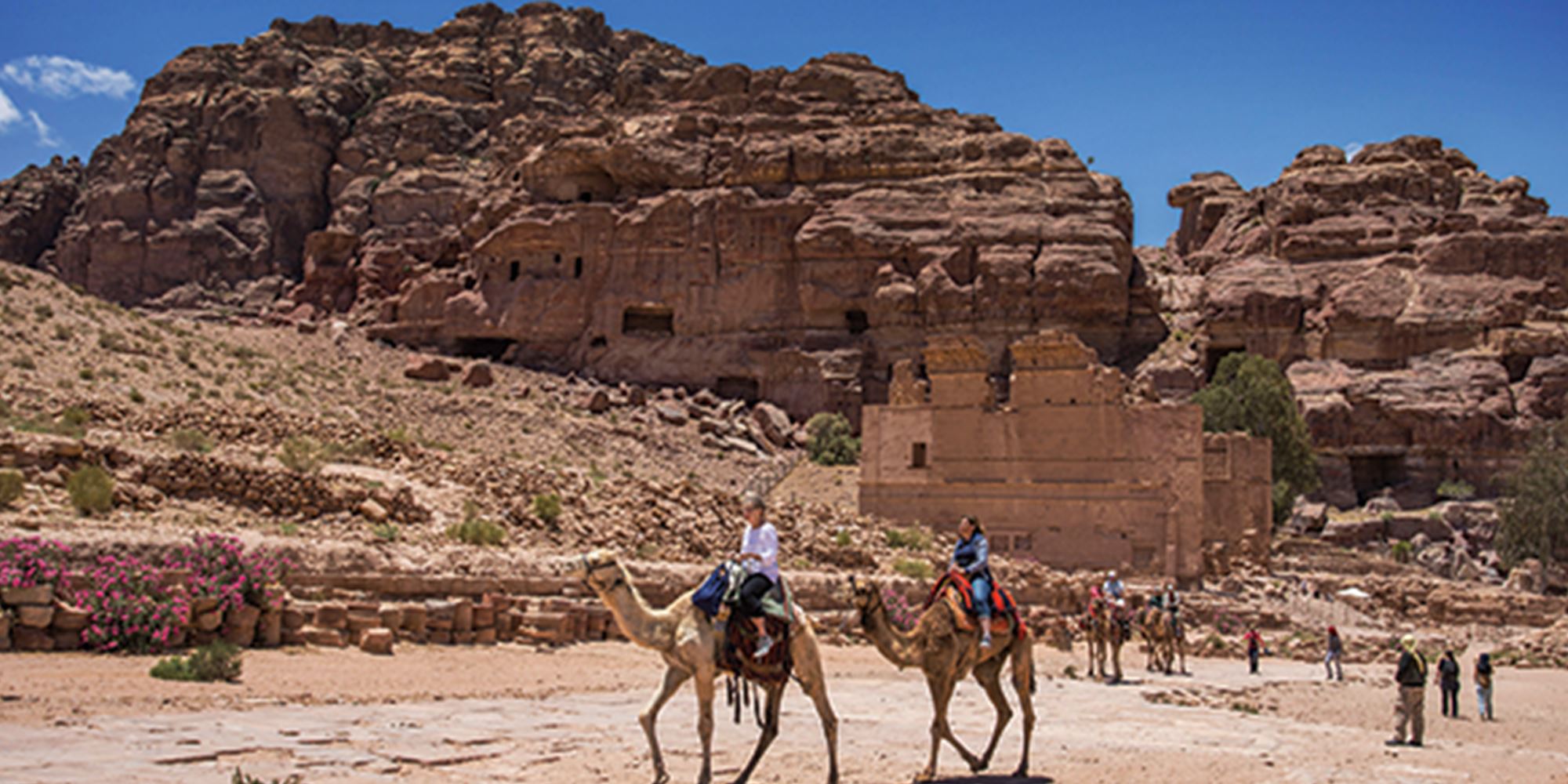
Petra flourished as the capital of the Nabataean Kingdom, whose traders connected Arabia with Egypt, Syria, and the Mediterranean world. The Nabataeans carved monumental façades into the rock and engineered channels, dams, cisterns, and pipes that made life possible in a demanding desert environment.
Today Petra is a UNESCO World Heritage Site and one of the New Seven Wonders of the World. Its importance comes not only from the Treasury, but from the complete cultural landscape—architecture, water engineering, sacred places, tombs, paths, and the continuing presence of local communities around Wadi Musa and Umm Sayhoun.
Petra at a Glance
- Location: Southern Jordan, beside Wadi Musa.
- Distance from Amman: Roughly 235 kilometres; allow around three hours by road depending on traffic and stops.
- Distance from Aqaba: Roughly 125 kilometres.
- Recommended visit: One full day for the essentials; two days for a better pace and additional trails.
- Physical demand: Extensive walking on uneven ground; the Monastery and high viewpoints involve many steps.
- Best start: Arrive when the site opens, before the heat and busiest period.
The Main Petra Route
1. The Bab Al-Siq Approach
After the Visitor Centre, the route passes the Djinn Blocks and the Obelisk Tomb before reaching the entrance to the Siq. Do not rush this opening section: it introduces Petra’s funerary architecture and the landscape that shaped the city.
2. The Siq
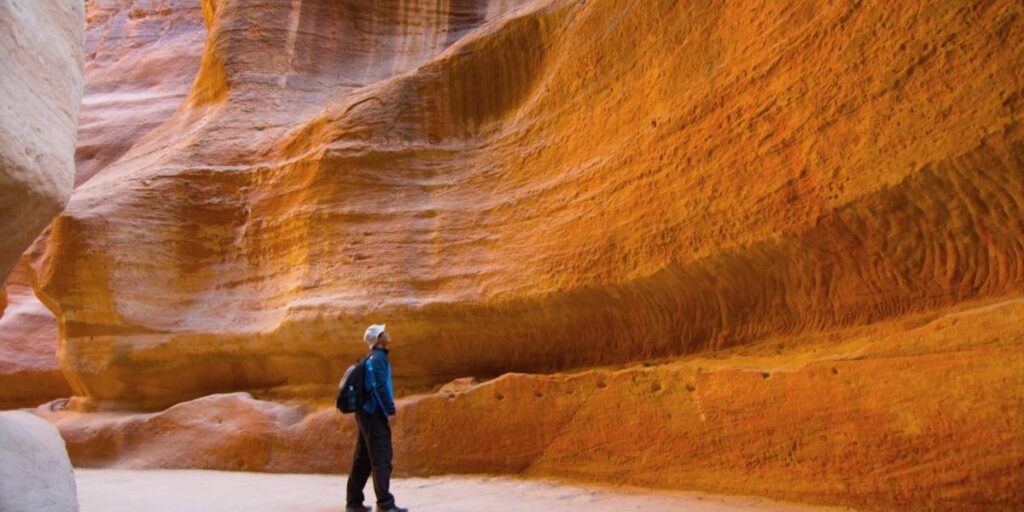
The Siq is a narrow natural gorge extending for more than a kilometre. Look closely at the remains of water channels, carved niches, paving stones, and reliefs along the walls. The changing light and towering sandstone make the walk memorable even before the Treasury appears.
3. The Treasury
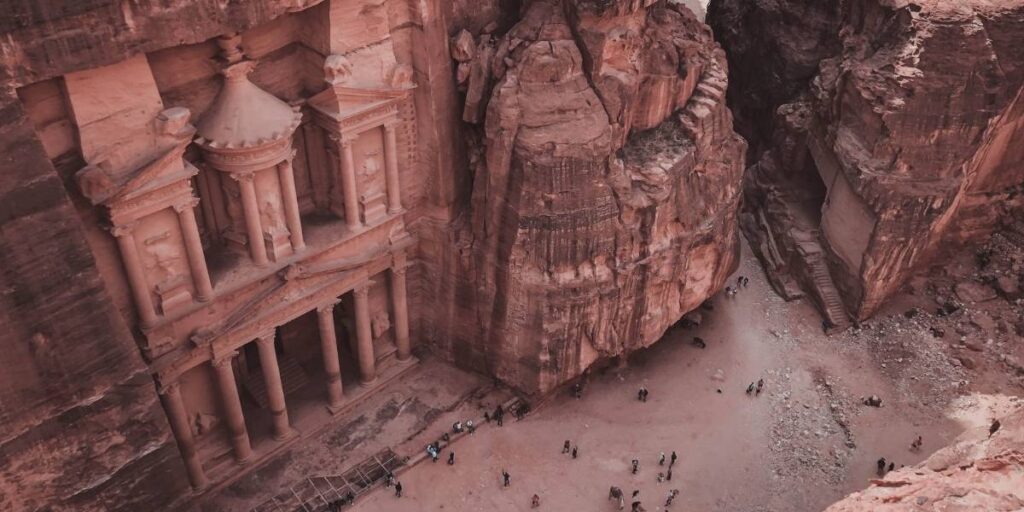
Al-Khazneh, or the Treasury, is Petra’s most recognisable façade. It was probably created as a royal tomb rather than a storehouse for treasure. Arrive early for quieter views, but remember that climbing unsafe unofficial routes for a photograph can damage the site and put visitors at risk. Use authorised trails and follow local instructions.
4. Street of Facades and the Theatre
Continue past rows of rock-cut tombs to Petra’s theatre, which was carved into the mountainside and later adapted during the Roman period. This part of the route shows how funerary, civic, and ceremonial spaces existed side by side.
5. The Royal Tombs
The Urn Tomb, Silk Tomb, Corinthian Tomb, and Palace Tomb form one of Petra’s grandest groups of monuments. Their façades catch the light beautifully, and the elevated area provides broad views over the main valley. Allow extra time if you plan to climb toward Al-Khubtha viewpoint.
6. Colonnaded Street, Great Temple and Qasr Al-Bint
The main valley opens into Petra’s urban centre, where you can explore the Colonnaded Street, temple complexes, the church area, and Qasr Al-Bint. These remains help visitors understand Petra as a living city rather than a collection of tomb façades.
7. The Monastery
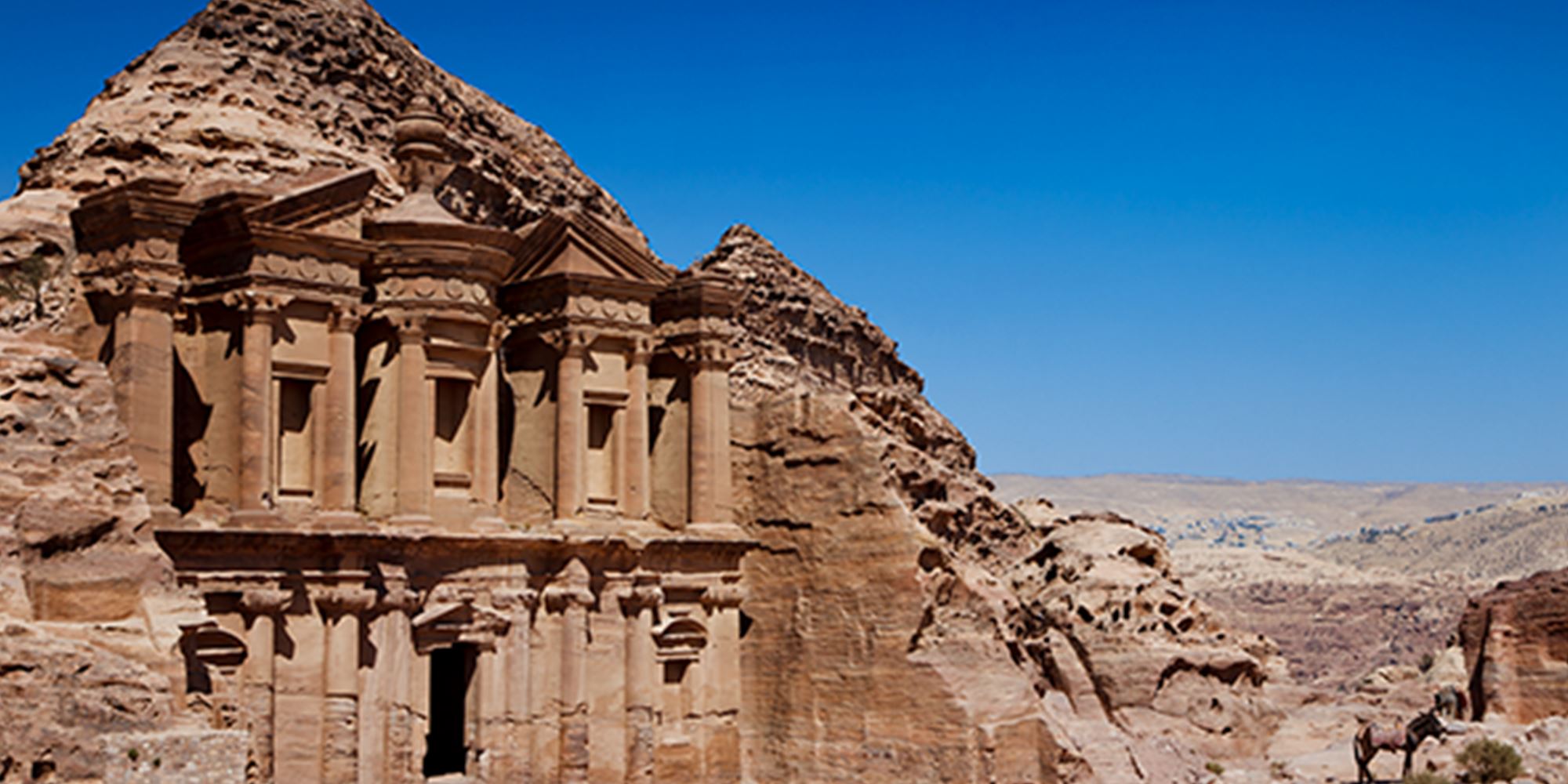
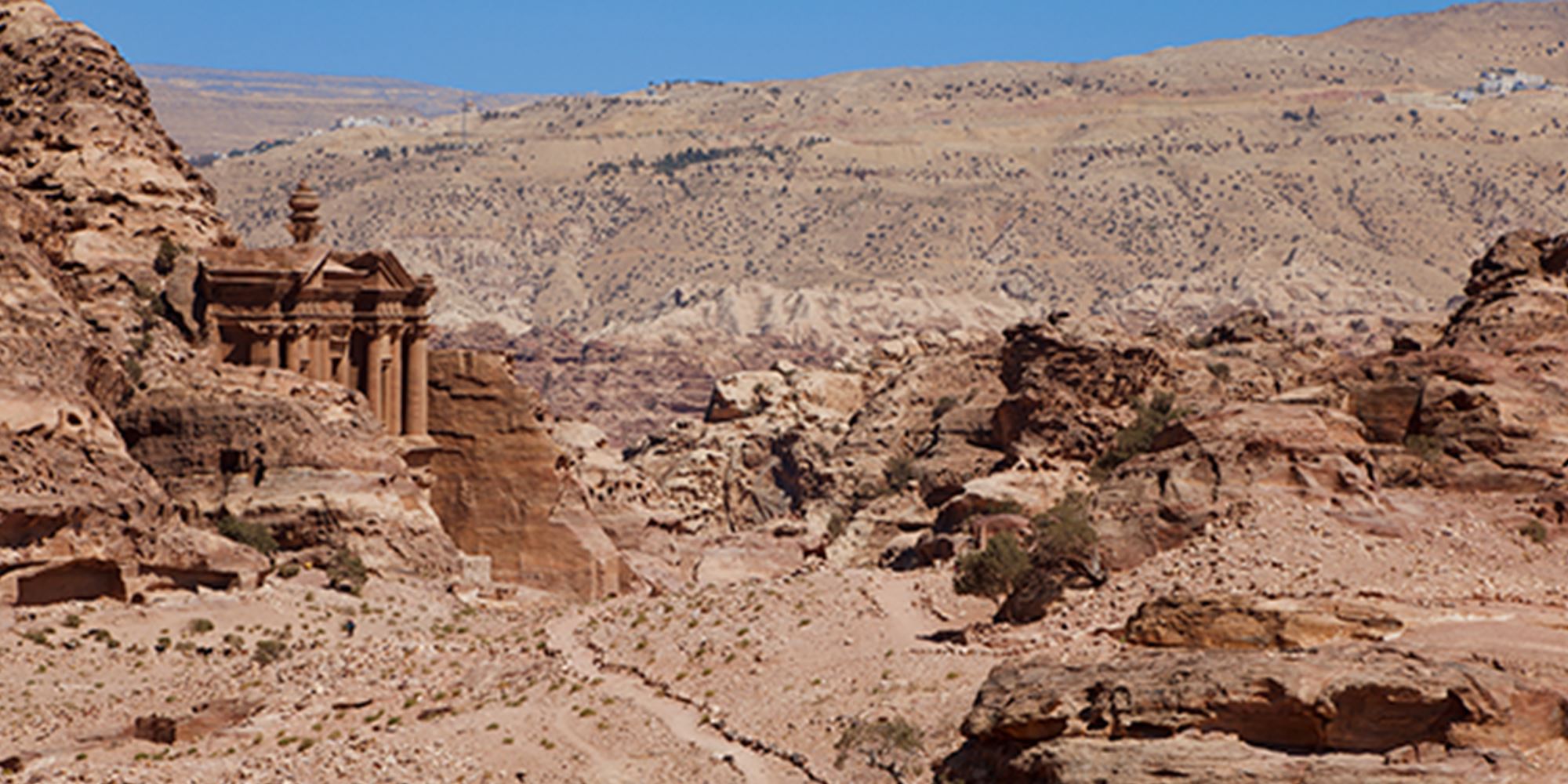
Ad-Deir, the Monastery, is one of Petra’s largest monuments. Reaching it requires a long climb involving hundreds of steps, so carry water, pace yourself, and avoid the hottest part of the day. The surrounding viewpoints are impressive, but stay behind safe edges and follow marked paths.
Other Important Petra Trails
Al-Khubtha Trail
This route climbs above the Royal Tombs toward a viewpoint overlooking the Treasury. It is physically demanding and involves exposed sections. Check official trail status and begin only with enough daylight, water, and suitable footwear.
High Place of Sacrifice
The climb leads to an ancient ceremonial area and panoramic views over Petra. Some visitors continue via Wadi Farasa, passing monuments and quieter valleys before reconnecting with the main site. A guide is valuable for route context and navigation.
Back Route and Little Petra Connections
Routes approaching the Monastery from the Little Petra area may involve transfers, guiding arrangements, and changing access rules. Organise them only through authorised providers and verify the current official procedure before travelling.
How Many Days Do You Need in Petra?
One Day
Start at opening time and follow the main trail through the Siq, Treasury, Street of Facades, theatre, Royal Tombs, and central valley. Add the Monastery only if your fitness, weather, and daylight allow. A one-day visit is rewarding, but it involves substantial walking.
Two Days
Two days provide the best balance for most visitors. Use day one for the main trail and central monuments. On day two, choose the Monastery, Al-Khubtha viewpoint, High Place of Sacrifice, or a guided secondary route. You will have more time for photography, interpretation, and rest.
Three Days
Three days suit hikers, photographers, archaeology enthusiasts, and travellers who prefer a slow pace. Spread the major climbs across separate mornings and leave room for the Petra Museum, Little Petra, local food, and Wadi Musa.
A Realistic One-Day Petra Itinerary
Opening time: Enter early and walk through Bab Al-Siq and the Siq.
Morning: Spend time at the Treasury, then continue to the Street of Facades, theatre, and Royal Tombs.
Midday: Reach the central valley, rest, eat, and decide whether conditions suit the Monastery climb.
Afternoon: Visit the Great Temple, Colonnaded Street, church area, and Qasr Al-Bint. Fit visitors can continue to the Monastery with enough daylight.
Return: Remember that you must walk back through the site to the Visitor Centre. Save energy and water for the return journey.
Best Time to Visit Petra
- Spring: Pleasant temperatures and longer days, but also one of the busiest seasons.
- Autumn: Comfortable walking weather and generally clear light.
- Winter: Cooler temperatures and quieter periods; rain and flash-flood risk require attention to forecasts and closures.
- Summer: Very hot during midday. Enter early, reduce exposed climbs, and rest during peak heat.
Petra may close or restrict trails during severe weather. Check the official Petra Development and Tourism Region Authority information shortly before your visit and follow all on-site safety instructions.
Tickets, Opening Hours and Jordan Pass
Opening times and ticket conditions change by season, nationality, residency status, and the number of visiting days. Jordan Pass packages may include one, two, or three consecutive Petra days depending on the selected package, while Petra by Night requires a separate ticket.
Use the official Visit Petra and Jordan Pass websites immediately before travelling. Avoid relying on an old screenshot, social-media post, or travel blog for current prices and hours.
Petra by Night
Petra by Night is a separate evening experience that follows the candlelit Siq toward the Treasury on scheduled nights. It does not replace a daytime visit, when the monuments, colours, and wider city can be properly explored. The programme and price can change, so confirm the current schedule and buy through official channels.
What to Wear and Carry
- Supportive closed shoes with good grip.
- Refillable water bottle and more water than you expect to need.
- Sun hat, sunscreen, and light breathable clothing.
- A warm layer in winter or for early mornings and evenings.
- Small snacks and any essential medication.
- Offline map and a charged phone or power bank.
Petra for Families and Visitors with Limited Mobility
Families can enjoy the Siq and Treasury, but distances are long and surfaces are uneven. Plan frequent breaks and protect children from sun and steep edges. Strollers are difficult on many sections.
Accessibility options and electric club-car services may be available on specific sections, but they do not make every monument or trail step-free. Contact the official Visitor Centre before arrival to discuss current services, routes, and assistance.
Responsible Visiting
- Do not climb monuments or enter closed areas.
- Use official trails and licensed guides.
- Never photograph people closely without permission.
- Carry your rubbish out and avoid single-use plastics where possible.
- Do not feed or mistreat working animals; choose walking when you comfortably can.
- Support local guides, restaurants, craftspeople, and accommodation providers.
Where to Stay and Eat
Wadi Musa has accommodation ranging from hostels and family guesthouses to established hotels near the Visitor Centre and properties on the surrounding hills. Choose based on walking access, transport, heating or air-conditioning, and whether breakfast begins early enough for your Petra plan.
Local restaurants serve mansaf, maqluba, grilled meats, mezze, soups, vegetarian dishes, and Bedouin-style food. Petra Kitchen and community dining experiences can add cultural context, but reserve popular experiences in advance.
Combining Petra with Little Petra, Wadi Rum and Aqaba
Little Petra makes a useful half-day addition, especially for visitors staying two nights. Wadi Rum pairs naturally with Petra for a history-and-desert itinerary, while Aqaba adds the Red Sea. Avoid compressing Petra and Wadi Rum into a rushed single day unless your time is extremely limited.
Frequently Asked Questions
Can I see Petra in one day?
Yes, if you start early and focus on the main route. Two days are better if you want the Monastery, high viewpoints, or a calmer pace.
How difficult is the walk?
The main route involves many kilometres on uneven ground. The Monastery and major viewpoints require steep climbs and hundreds of steps. Choose routes that match your fitness and the weather.
Do I need a guide?
A guide is not required for the main trail, but a licensed guide adds valuable historical context and is strongly recommended for less familiar routes.
Is Petra safe during rain?
Heavy rain can create dangerous flash floods in narrow valleys. Follow official weather warnings and closures without exception.
Final Planning Advice
Petra rewards patience. Arrive early, choose a route that matches your time and ability, and look beyond the Treasury. The water channels, tombs, temples, colours, and mountain paths tell the story of a complete city—and that wider story is what makes Petra unforgettable.